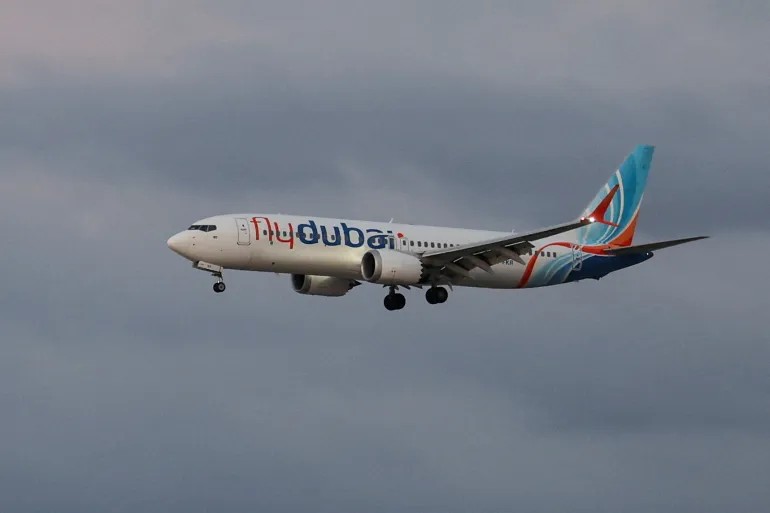
The alleged attack aboard Flydubai Flight FZ1073 has triggered an international investigation and raised several questions about aviation security and the vetting of flight crew.
The Dubai-to-Tel Aviv flight was forced to make an emergency landing in Saudi Arabia after the co-pilot allegedly attacked Captain Smit Machchhar inside the cockpit. The UAE has described the incident as an attempted “terrorist act,” while investigators continue examining the motive and circumstances.
Here are the five major questions surrounding the incident:
1. How was the co-pilot allowed to fly despite earlier security concerns?
Media reports say the co-pilot, identified by several outlets as Omani national Hamam al-Hammami, had previously faced concerns over his alleged ideological views. Reports also claim he had been removed from flight training and later reassigned to other duties.
Investigators are now examining how he was eventually cleared to serve as a Flydubai co-pilot.
2. How did a passenger help stabilise the aircraft?
During the incident, the aircraft reportedly entered a steep descent. After the cockpit door was opened, passengers intervened and helped overpower the alleged attacker.
Israeli Prime Minister Benjamin Netanyahu later met passenger Yaniv Hayoun, described as a plumber, who said he had previously watched aircraft-crash investigation programmes and used what he had learned to help with the controls. This has prompted questions about how a passenger with no professional flying experience could assist during such a critical situation.
3. How did the aircraft survive the dramatic altitude loss without mass injuries?
Flight-tracking data indicated that the aircraft lost more than 5,180 metres (17,000 feet) in less than two minutes.
Despite the sudden descent and panic among passengers, there were no reported mass injuries. Aviation experts have questioned how the aircraft and passengers withstood the extreme manoeuvre and subsequent recovery.
4. How was an Omani co-pilot permitted to operate a flight to Israel?
Oman does not have official diplomatic relations with Israel, raising another security question over how an Omani national was able to operate a flight arriving in Israel.
Reports said Israeli authorities had received the passenger and crew list before the flight. Investigators are examining what security checks were carried out and whether any warning signs were missed.
5. Why did the co-pilot pray shortly before the attack?
According to reports, Captain Machchhar told Netanyahu that the co-pilot had asked to pray shortly before the alleged attack.
The timing of the prayer has generated questions, although it remains unclear what the prayer meant or whether it was connected to the attack. Investigators have yet to establish a definitive motive.
Investigation Continues
Authorities in the UAE, Israel, Saudi Arabia and Australia are examining different aspects of the case, including the co-pilot's background, possible motives, security clearances and international connections. Australian authorities are also investigating his links to Australia.
For now, several details remain unconfirmed, and investigators are expected to determine whether the incident was a planned terrorist operation, an individual act or something else.
"The decisions we make today will shape the world for generations to come."