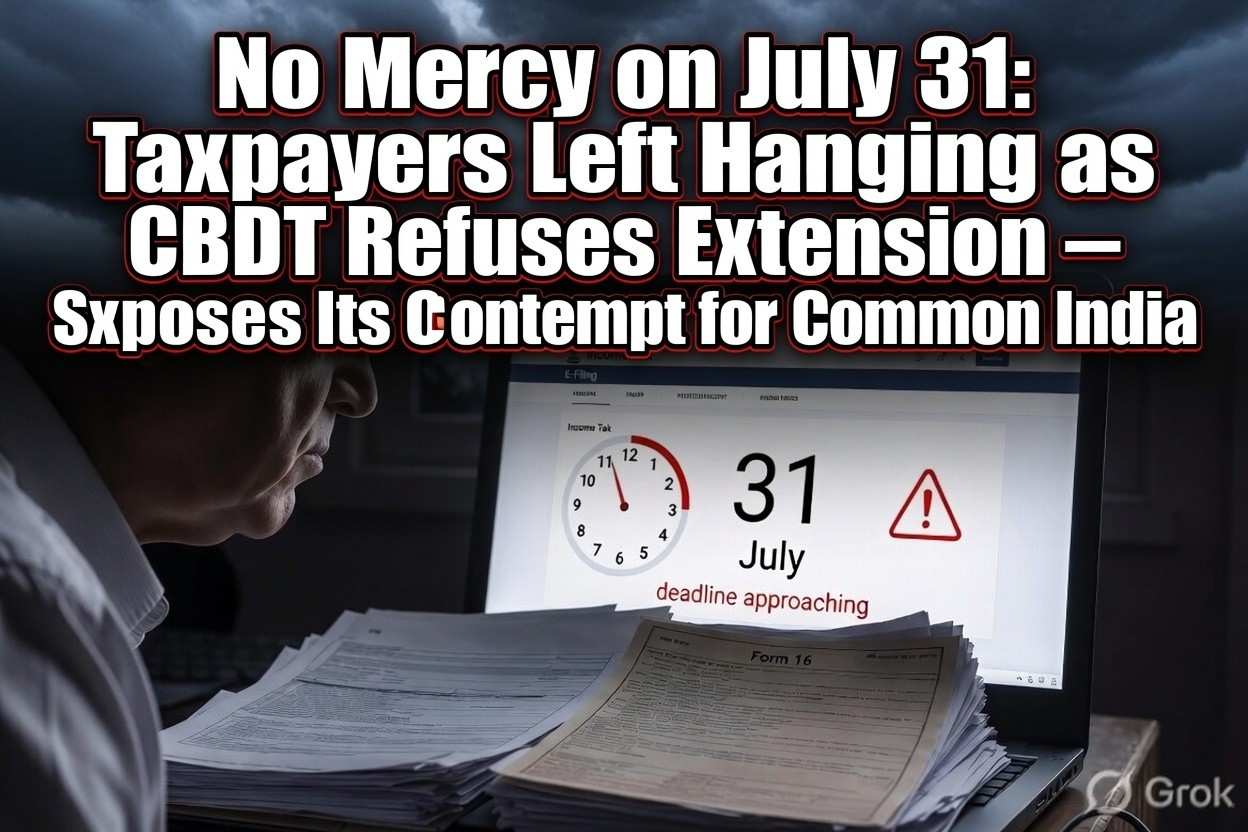
The clock is ticking loud and clear. For Assessment Year 2026-27, the statutory due date for filing Income Tax Returns under ITR-1 and ITR-2 remains 31 July 2026. As of late July, more than 4 crore returns have already been submitted. The Income Tax Department keeps announcing that the e-filing portal is functioning smoothly and that support lines are running 24×7 until the final hour. Tax experts across the board — from ClearTax to Tax2win and independent chartered accountants — have stated that a blanket extension beyond 31 July is highly unlikely.
This year the forms were notified early, the staggered deadline of 31 August for non-audit ITR-3 and ITR-4 cases has reduced some pressure, and the department has publicly claimed it fixed technical issues in advance. On paper, everything looks orderly. In reality, the system is once again squeezing ordinary taxpayers into a last-minute panic while offering them nothing in return.
Every year the same theatre plays out. Salaried individuals and small professionals race against Form 16 delays, AIS and Form 26AS mismatches, unexplained interest entries from banks, and the constant fear that one wrong click will invite notices. The department’s answer is always the same: file on time or pay. Under Section 234F, late filing after 31 July attracts a fee of ₹1,000 if total income is up to ₹5 lakh and ₹5,000 if it exceeds that. Interest under Section 234A starts running on any unpaid tax. Carry-forward of losses can be jeopardised. The message is clear — compliance is non-negotiable, but the tools and timelines remain designed for bureaucratic convenience, not human reality.
The government’s refusal to extend the date this year is being sold as a sign of improved systems. In truth it reflects a deeper arrogance. When the portal faced major problems in previous years, extensions were granted only after public outcry and media pressure. This year, because the numbers look better and the official narrative of “smooth functioning” is intact, the same officials who lecture citizens on digital India see no need for flexibility. The middle-class taxpayer who spends nights reconciling data that the department itself has uploaded incorrectly is expected to absorb the stress in silence.
There is no official circular from the Central Board of Direct Taxes extending the 31 July 2026 deadline. Support has been ramped up until 23:59 hours on that day, but that is not the same as giving people breathing space. Belated returns can still be filed later in the assessment year, yet the financial and procedural cost of missing the original date falls entirely on the individual. Large businesses and those with audit requirements already enjoy a later window. The salaried majority, the very people who form the backbone of tax collection, are given the shortest rope.
This is not efficient administration. It is a system that extracts compliance through fear of penalty while remaining indifferent to the daily frictions its own processes create. The same political leadership that celebrates rising tax collections and digital filings has never seriously simplified the experience for the ordinary filer. Instead, every July becomes a ritual of anxiety, late-night filings, and quiet acceptance that the state will not bend even when millions are still waiting for accurate data or professional help.
Taxpayers who have not yet filed should treat 31 July as final. Waiting for an extension that the department has given no signal of granting is a costly gamble. The real story behind the “no extension” stance is not technological success. It is the continued willingness of the system to prioritise its own deadlines over the lived difficulties of the people it claims to serve. That is the face of the machine that keeps breaking the nation one rigid rule at a time.
"The decisions we make today will shape the world for generations to come."