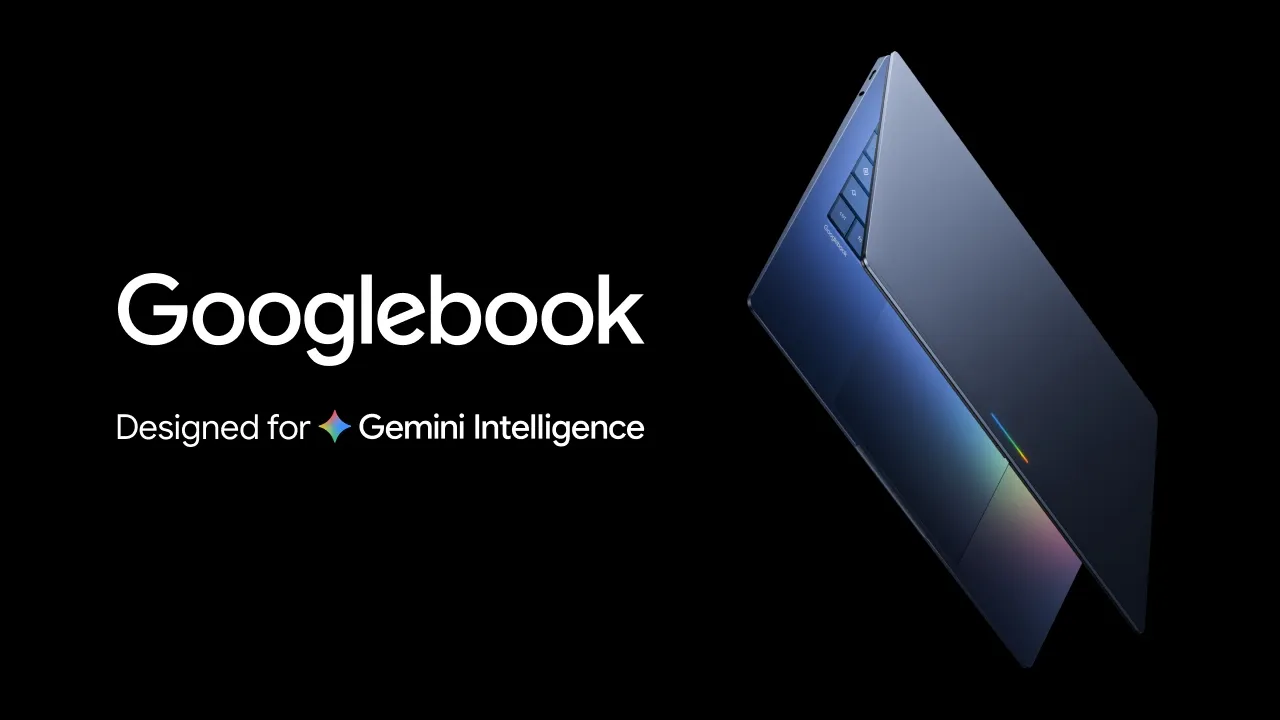
Qualcomm did not invent Google Books. It bought the half of the launch that does not run on Intel.
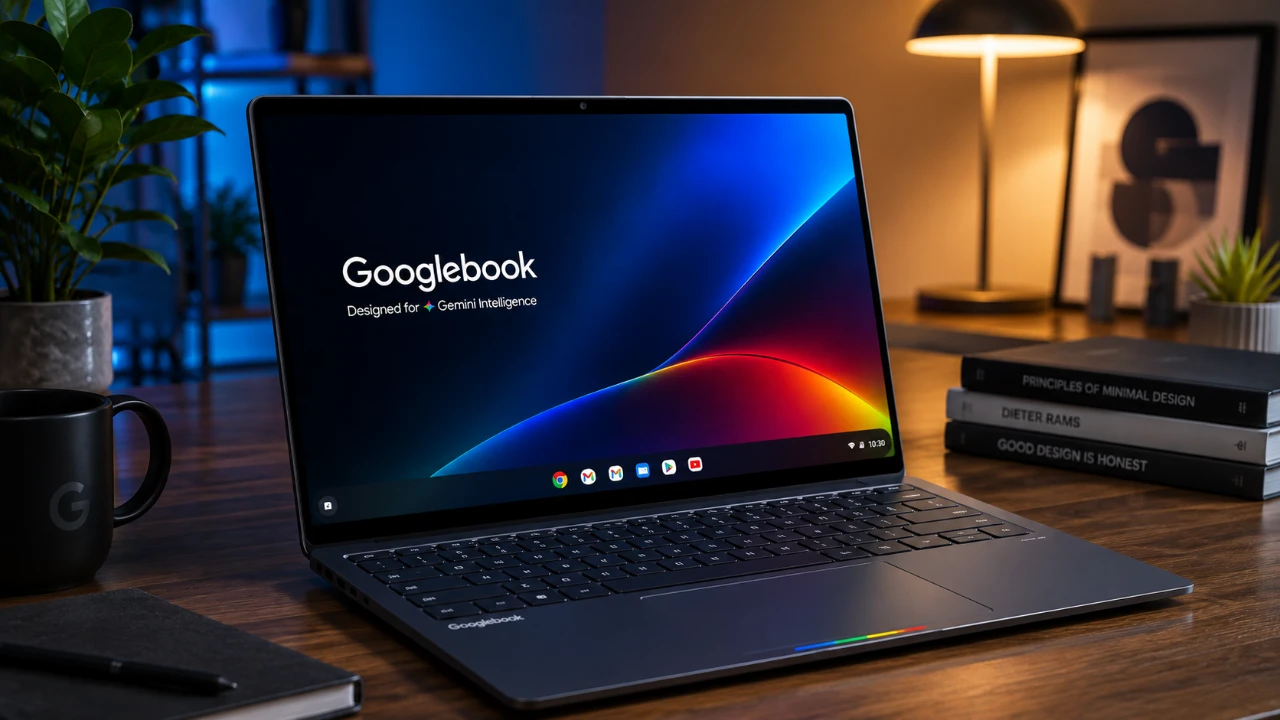
On 21 September 2026, Google finally named prices, chips, and a ship week. The category is still a flagship Android-stack laptop internally aluminum, sold as Googlebook OS — built by Acer, ASUS, Dell, HP and Lenovo. Only two of those five open with Snapdragon X Elite: the Dell XPS Googlebook and the HP Googlebook 14. Those are the machines this piece is about. The $899 Acer is an Intel convertible. Do not let a press release flatten them into one slab.
The chip
Snapdragon X Elite is not a 2026 invention. It is Qualcomm’s 12-core Oryon design, clocks quoted up to 4.0 GHz on the HP SKU (X1E-80-100), with an Adreno GPU and a Hexagon NPU rated at 45 TOPS. LPDDR5x, Wi-Fi 7, Bluetooth 5.4, up to three external 4K-60 displays. Google’s platform floor is 16 GB of RAM, a 45-plus TOPS NPU class, and a promise of quiet fans because the AI work is supposed to stay on the package. Qualcomm’s own note sells “up to 19 hours” on Snapdragon Googlebooks. Google’s generic line is more timid: up to 14 hours of video, 16 hours of browsing across the whole fleet. Believe the OEM page for the model in your cart, not the slogan.
Dell XPS Googlebook
This is the thin one. 13.4-inch 2.5K touch panel, 500 nits, 120 Hz in hands-on notes — an IPS/LCD InfinityEdge, not the OLED the others flaunt. Machined aluminium, 12.7 mm, about 1.0 kg / 2.2 lb. Sixteen or 32 GB of RAM, 512 GB storage and up. Two USB-C ports. Fingerprint. Dual-fan cooling that Dell says stays quiet. Battery target: up to 16 hours of Netflix on Dell’s own blog; some retail copy says 18. Google Store list starts at $1,199. Best Buy has been showing $999. Dell.com follows in October. If you want Arm, a small bag, and the XPS badge, this is the SKU. You give up HDMI, USB-A and an OLED.
HP Googlebook 14
This is the OLED Arm machine. Fourteen-inch 2.8K (2880×1800) touch, 500 nits, 120 Hz. All-aluminium, 14 mm, about 1.24 kg / 2.74 lb. Same X Elite, 16–32 GB LPDDR5x, storage from 256 GB through 1 TB — the only launch Googlebook officially called out to a terabyte. Haptic glass pad. Face unlock and a fingerprint in the power button. Two USB-C and a headphone jack. Wi-Fi 7. A 70 Wh pack that HP rates up to 19 hours, with a 65 W GaN brick claiming 50 percent in about 45 minutes. Street openers sit around $1,199–$1,299 depending on the store. Vapor-chamber talk is HP’s answer to the same heat problem Apple put a triple-size chamber under an A20 Pro for.
What is the software actually?
This is not a Chromebook with a glow stripe. Android apps run native, not in the old ARCVM box. Magic Pointer puts Gemini on whatever you highlight. Create My Widget builds a tile from a sentence. Cast My Apps and Quick Access treat an Android 17 phone as a second drive and a second app shelf. Glowbar on the lid is battery theatre and a Gemini tell. Linux is no longer a developer-mode hobby: a pKVM-isolated terminal is built in for Claude Code, Antigravity CLI, and the rest of the agent fashion. Google promises feature drops and security patches for up to ten years, plus twelve months of Google AI Pro with 5 TB of Drive and a short stack of YouTube Premium and Photoshop trials. That software pitch is identical on Intel and Snapdragon. The X Elite pitch is that the NPU and the battery curve make the pitch less hypothetical.
Where it ships and where it does not
Pre-orders opened on 21 September on Google Store, Best Buy and partner sites. Units are due 4 October in the United States and 5 October in Canada, the UK, Ireland, France, Germany and Australia. India is not in that sentence. The republic that announced Digital India laptops, PM e-VIDYA kits and an “AI superpower” will watch a $1,199 Arm notebook clear Western customs while Bengaluru still buys a Windows box or a Chromebook Plus. If and when these land here, 18 percent GST plus the usual electronics stack will turn $1,199 into a number that looks like an iPhone 18 Pro, not a student machine. Gemini will sit on a device that phones home. The state that cannot keep an EPFO claim moving will call the absence “under evaluation.”
Should you care about X Elite specifically?
Pick Snapdragon if battery hours and on-device Gemini matter more than a full port farm and if you already live in Android. Pick Intel if you want the $899 Acer hinge, the 15.3-inch Lenovo panel, or software that still assumes x86 first. MediaTek is promised later. Nobody has published an India MRP. A pre-order button in California is not a launch in Noida.
The honest product is a premium Android laptop with a 2024-era flagship Arm chip, a glow bar, and a ten-year update vow. The dishonest product is the speech that will claim India was always in the room.
Disclaimer
US dollar prices and battery-hour claims are OEM and Google figures as of 21 September 2026 and vary by configuration and store. India pricing and availability are unannounced. This is news, not a buying order.
Official sources
Qualcomm — “Snapdragon X Series Powers Googlebook,” 21 September 2026 (Dell and HP first X Elite OEMs; Oryon, Hexagon NPU, Android app support)
Google blog — “Googlebook is raising the bar for premium laptops,” 21 September 2026 (from $899; Intel Core Ultra Series 3 and Snapdragon X Elite; 16 GB baseline; Oct 4/5 ship list)
Dell blog — XPS Googlebook (Snapdragon X Elite, 13.4-inch 2.5K, 12.7 mm, 2.2 lb)
HP / launch coverage — HP Googlebook 14 (X1E-80-100, 14-inch 2.8K OLED, up to 32 GB / 1 TB, up to 19-hour OEM claim)
"The decisions we make today will shape the world for generations to come."