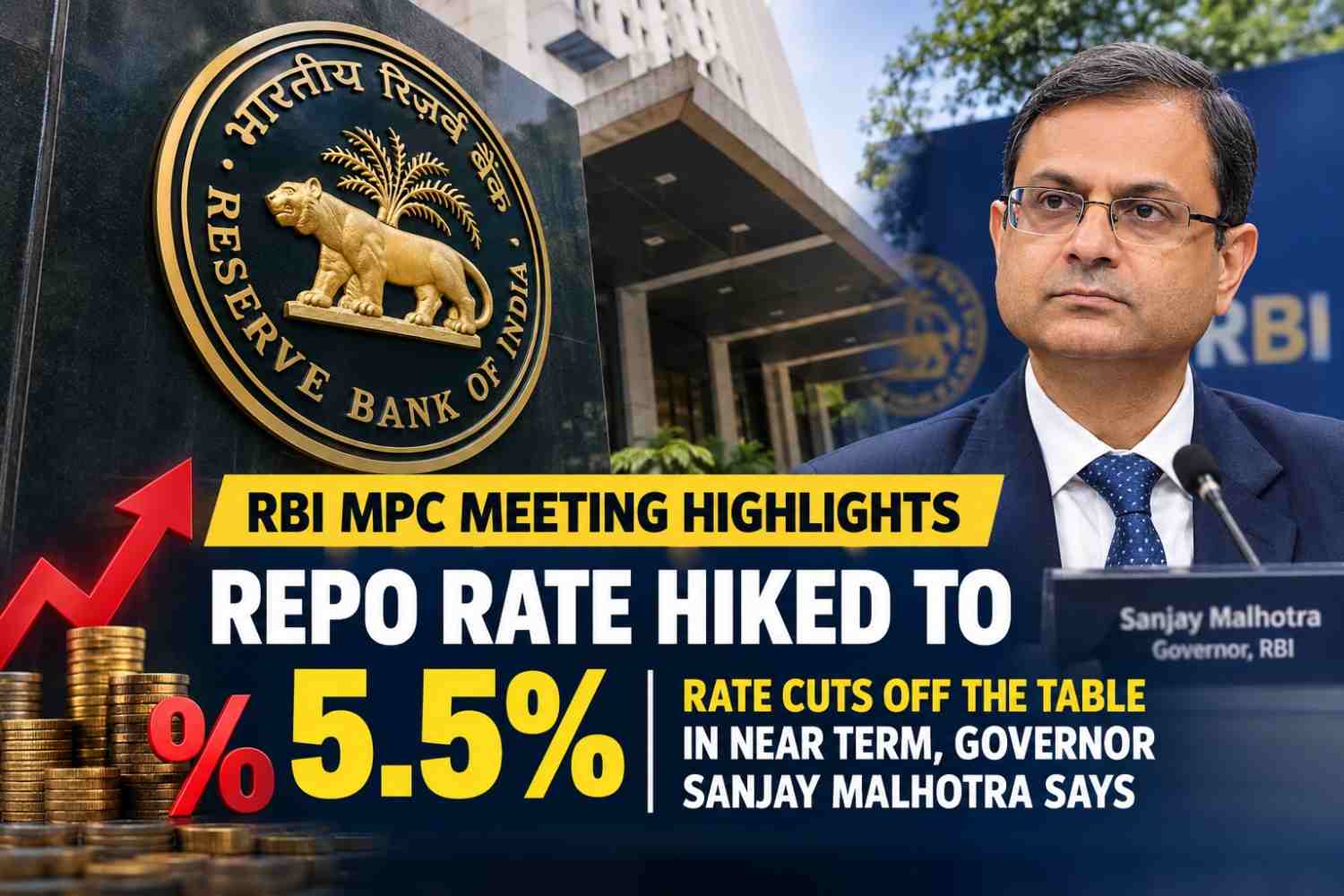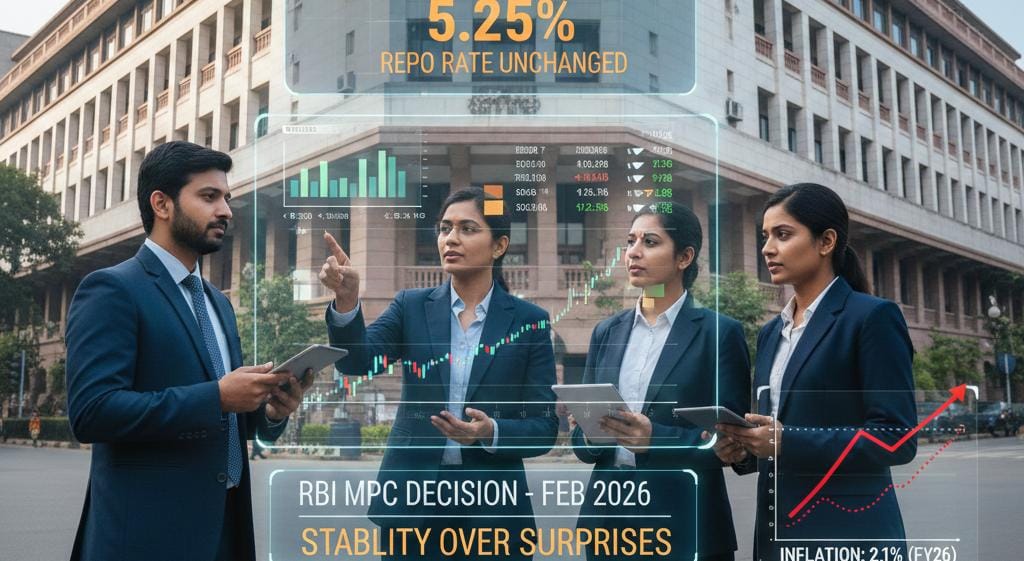
On February 6, 2026, the Reserve Bank of India’s (RBI) Monetary Policy Committee (MPC) concluded its first meeting of the year with a clear message: stability is the priority. Under the chairmanship of Governor Sanjay Malhotra, the six-member committee voted unanimously to keep the benchmark repo rate unchanged at 5.25%.
This decision marks a strategic pause following an aggressive easing cycle in 2025, during which the central bank slashed rates by a cumulative 125 basis points to support a post-pandemic recovery. By maintaining the status quo, the RBI is signaling that while the "heavy lifting" of rate cuts may be over, the focus has now shifted to ensuring that the benefits of previous easing fully permeate the economy while keeping a watchful eye on a shifting global landscape.
The Macroeconomic Dashboard: Growth at the Helm
The most striking takeaway from the February policy statement was the upward revision of India's growth projections. The RBI now estimates real GDP growth for FY26 at 7.4%, a nudge up from its previous 7.3% forecast.
Several domestic pillars support this optimism:
- Resilient Consumption: Private consumption is projected to grow by 7%, fueled by recent income tax rationalization in the Union Budget and stable urban demand.
- Infrastructure Momentum: A 9% increase in public capital expenditure (totaling ₹12.2 lakh crore) announced for FY27 is expected to create a significant multiplier effect.
- Trade Tailwinds: The successful completion of trade deals with the US and the European Union, alongside pacts with Oman and New Zealand, has provided a "buffer" against global volatility.
Inflation: The "Base Effect" Challenge
While India has enjoyed a period of remarkably low inflation—with CPI figures hitting 0.7% in November and 1.3% in December 2025—the MPC warned of a slight uptick on the horizon. The central bank revised its FY26 inflation projection to 2.1% (up from 2%), with a more pronounced rise expected in the first half of FY27 (Q1 at 4.0% and Q2 at 4.2%).
Governor Malhotra clarified that this is not a sign of overheating. Instead, it is driven by:
- Unfavourable Base Effects: The sharp price declines seen in early 2025 make current year-on-year comparisons look higher.
- Precious Metals: Rising gold and silver prices are estimated to add 60–70 basis points to the headline inflation.
- New Series Transition: With a new CPI series (base 2024=100) set for release on February 12, the RBI has deferred full-year FY27 projections until the April policy.
The Neutral Stance: Keeping the Powder Dry
The MPC decided to retain its "Neutral" stance, despite one member, Prof. Ram Singh, advocating for a shift to "Accommodative." A neutral stance provides the RBI with the "optionality" to move in either direction. In a world of diverging global monetary policies and geopolitical friction, the committee believes that remaining data-dependent is the safest course of action.
Beyond the Rates: Regulatory and Digital Frontiers
In a move to strengthen the financial ecosystem, the RBI announced several "people-centric" measures:
- Cyber Fraud Compensation: A landmark proposal to introduce a framework to compensate victims of small-value fraudulent transactions up to ₹25,000, even in cases where an OTP might have been shared.
- MSME Support: The limit for collateral-free loans to MSMEs has been doubled from ₹10 lakh to ₹20 lakh, a massive boost for the backbone of India’s manufacturing sector.
- Digital Payment Safety: New draft guidelines will be issued to curb "mis-selling" and regulate the conduct of loan recovery agents.
What This Means for You
For the average consumer, the status quo on the repo rate means that Home Loan EMIs and fixed deposit rates are likely to remain stable in the near term. For businesses, the focus on liquidity management ensures that credit remains available for productive sectors without stoking inflationary fires.
The Road Ahead
The RBI’s February 2026 decision is a vote of confidence in the "India Story." By choosing to wait and watch, the central bank is prioritizing the durability of growth over the thrill of further rate cuts. As the global economy grapples with uncertainty, India's monetary policy remains a beacon of calculated calm.
"The decisions we make today will shape the world for generations to come."