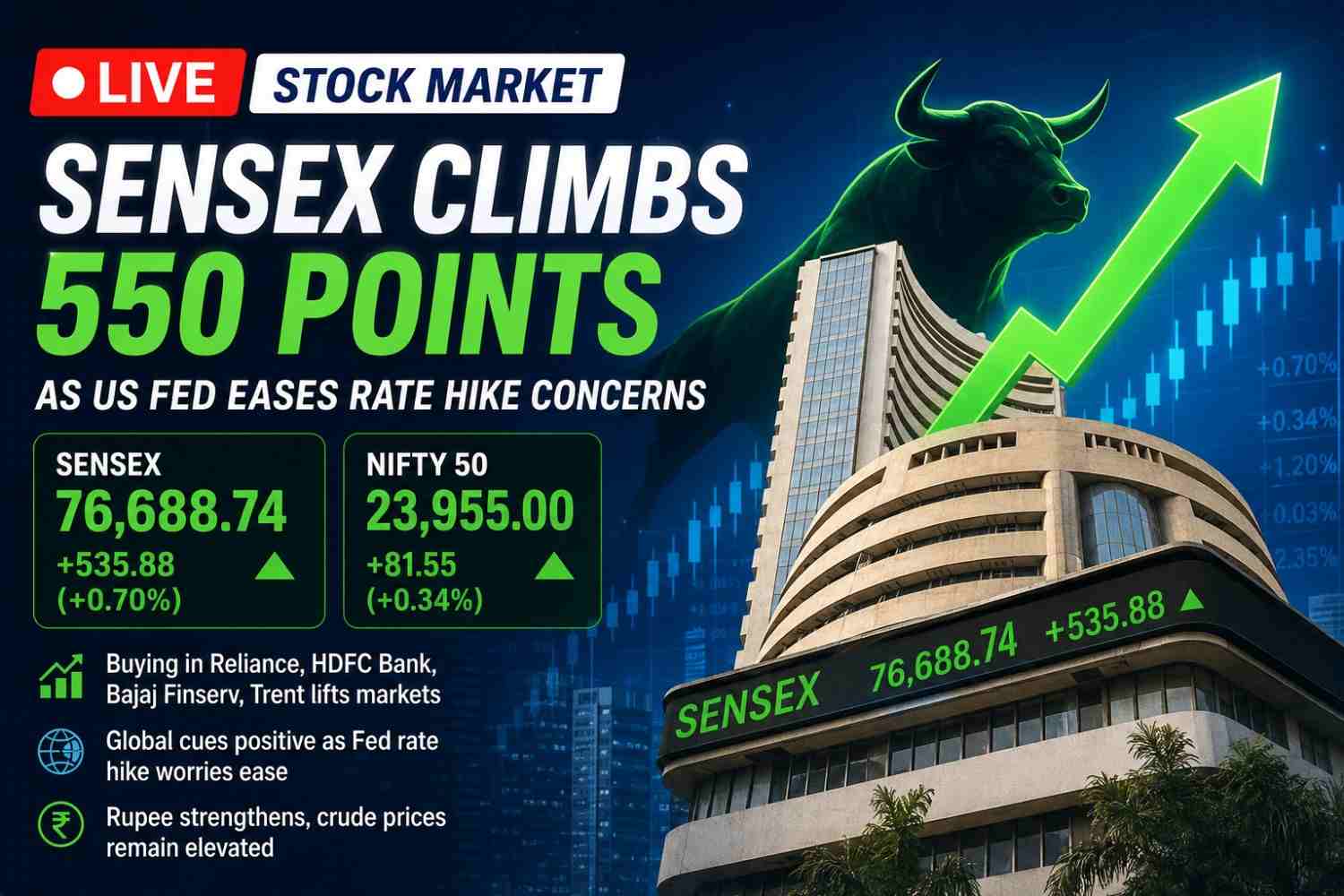
Indian equity markets witnessed a sharp rebound on Friday, September 4, after four consecutive sessions of losses. The Sensex climbed more than 500 points, while the Nifty 50 moved above the 23,950 mark in morning trade. At around 10 am, the Sensex was up 535.88 points at 76,688.74, while the Nifty gained 81.55 points to 23,955.
The key trigger behind the recovery was a decline in expectations of an immediate US Federal Reserve rate hike. Federal Reserve Governor Christopher Waller indicated that the central bank could hold rates steady if upcoming inflation data continues to show signs of easing. Following his comments, market expectations for a September rate hike fell to around 50%, from 63% earlier.
Lower US Treasury yields also supported global equity markets. Wall Street closed higher, with the Dow Jones gaining more than 1%, while the S&P 500 and Nasdaq also advanced. Positive cues from Asian markets further strengthened sentiment across Indian equities.
Sensex and Nifty performance
The Sensex recovered strongly from the previous session's weakness and briefly gained around 700 points during intraday trade. The Nifty 50 also moved close to the psychologically important 24,000 level.
Buying was seen across several heavyweight stocks, including Reliance Industries, HDFC Bank, Trent, Bajaj Finserv and Adani Ports. Capital-market stocks also gained after SEBI indicated a possible change to the settlement-price mechanism aimed at reducing auction-related volatility.
Global factors remain important
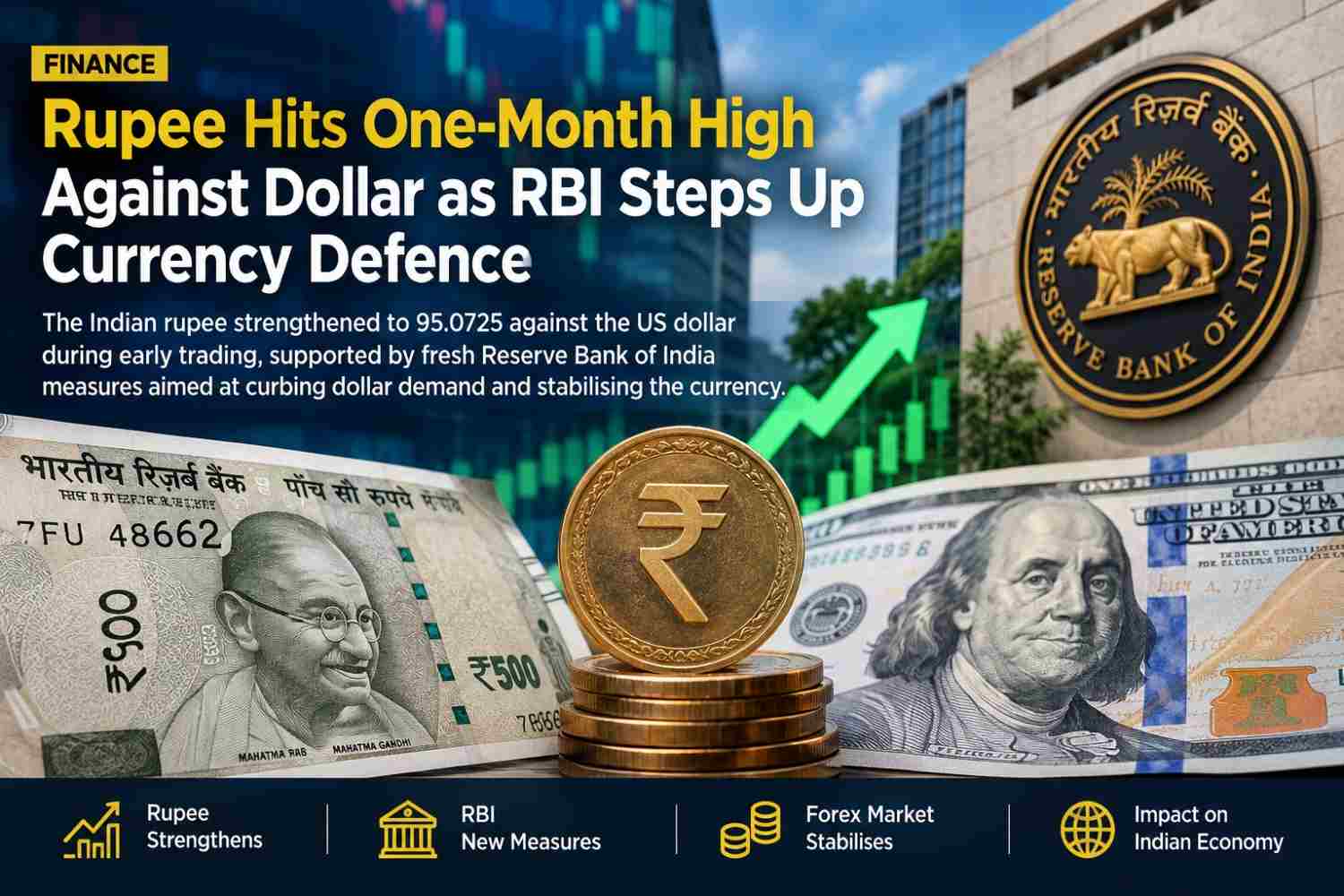
Despite the positive start, investors remain cautious because crude oil prices continue to stay elevated amid geopolitical tensions. Brent crude was around $95–96 a barrel, keeping inflation and interest-rate concerns alive. The Indian rupee also strengthened to around ₹94.59 against the US dollar in morning trade.
Markets will now closely track upcoming US employment and inflation data for further clues about the Federal Reserve's policy direction. For Indian equities, the sustainability of the recovery will depend on global cues, crude prices, foreign fund flows and developments in US monetary policy.
"The decisions we make today will shape the world for generations to come."