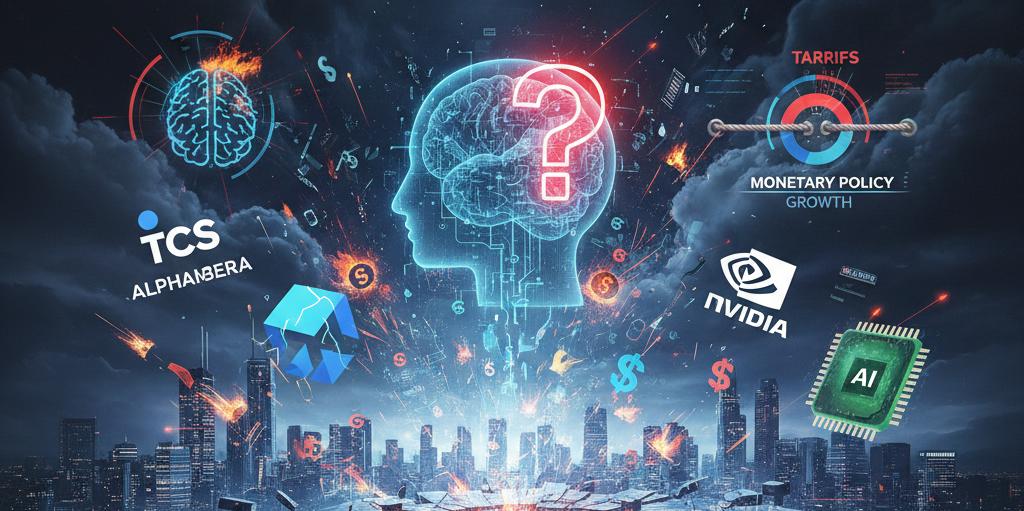
The global technology sector, the undisputed engine of market growth for the past several years, has hit a significant patch of turbulence in early 2026. After the "AI Gold Rush" of 2024 and 2025, the current market climate is characterized by a sharp correction. On February 23-24, 2026, major indices including the Nasdaq and India’s Nifty IT have seen notable declines, with bellwether stocks like TCS, Tech Mahindra, and Alphabet facing downward pressure.
This downturn is not a simple "crash" but rather a complex recalibration driven by geopolitical shifts, evolving monetary policies, and a fundamental change in how investors value Artificial Intelligence.
1. The "Tariff Tantrum" and Global Trade Uncertainty
The most immediate catalyst for the February 2026 slump is the sudden escalation of global trade tensions. Following a U.S. Supreme Court ruling that challenged previous executive "reciprocal" taxes, a new wave of 15% temporary tariffs has been introduced.
- Impact on Hardware: Companies reliant on global semiconductor supply chains are seeing their margins threatened.
- Software and Services: While tariffs primarily target physical goods, the resulting "unease" among trading partners like South Korea and Japan has sparked a broader sell-off in risk assets, including high-growth IT services.
- Uncertainty: Markets loathe ambiguity. The prospect of these tariffs lasting 150 days or becoming permanent has led institutional investors to "de-risk" by trimming their tech heavy portfolios.
2. From AI Hype to AI "Proof of Impact"
For two years, any company mentioning "Generative AI" saw its valuation soar. In 2026, that "honeymoon phase" has officially ended. Analysts are now demanding measurable outcomes rather than "proof-of-concepts."
The "Nvidia Fatigue"
While Nvidia continues to report massive revenue (hitting $44.1 billion in recent quarters), a growing concern is emerging: The ROI Gap. Investors are questioning if the massive capital expenditures (CapEx) by "Hyperscalers" like Amazon, Google, and Microsoft will actually translate into equivalent profit growth. If these giants are spending billions on chips but can't yet monetize the resulting AI services at scale, the entire "AI Supercycle" faces a valuation threat.
Winners vs. Losers
We are seeing a "winner-takes-all" dynamic. Companies that have failed to integrate "Agentic AI"—AI that can autonomously manage workflows—are being "punished" by the market. Investors are dumping "potential AI losers"—legacy software firms that are being undercut by more agile, AI-native rivals.
3. The Monetary Tug-of-War
Despite the Federal Reserve moving rates toward a "neutral" stance (targeting a 3.50% to 3.75% range), the cost of capital remains significantly higher than the era of "easy money."
- Discounted Cash Flow (DCF): For IT companies, whose value is often based on future earnings, higher interest rates mean those future profits are worth less today.
- Dispersion: BlackRock and J.P. Morgan analysts have noted that 2026 is seeing a "widening distribution of outcomes." We are no longer in a "rising tide lifts all boats" market. Instead, we see idiosyncratic defaults and downgrades even while aggregate macro data remains decent.
4. Sector-Specific Struggles: The Case of Indian IT
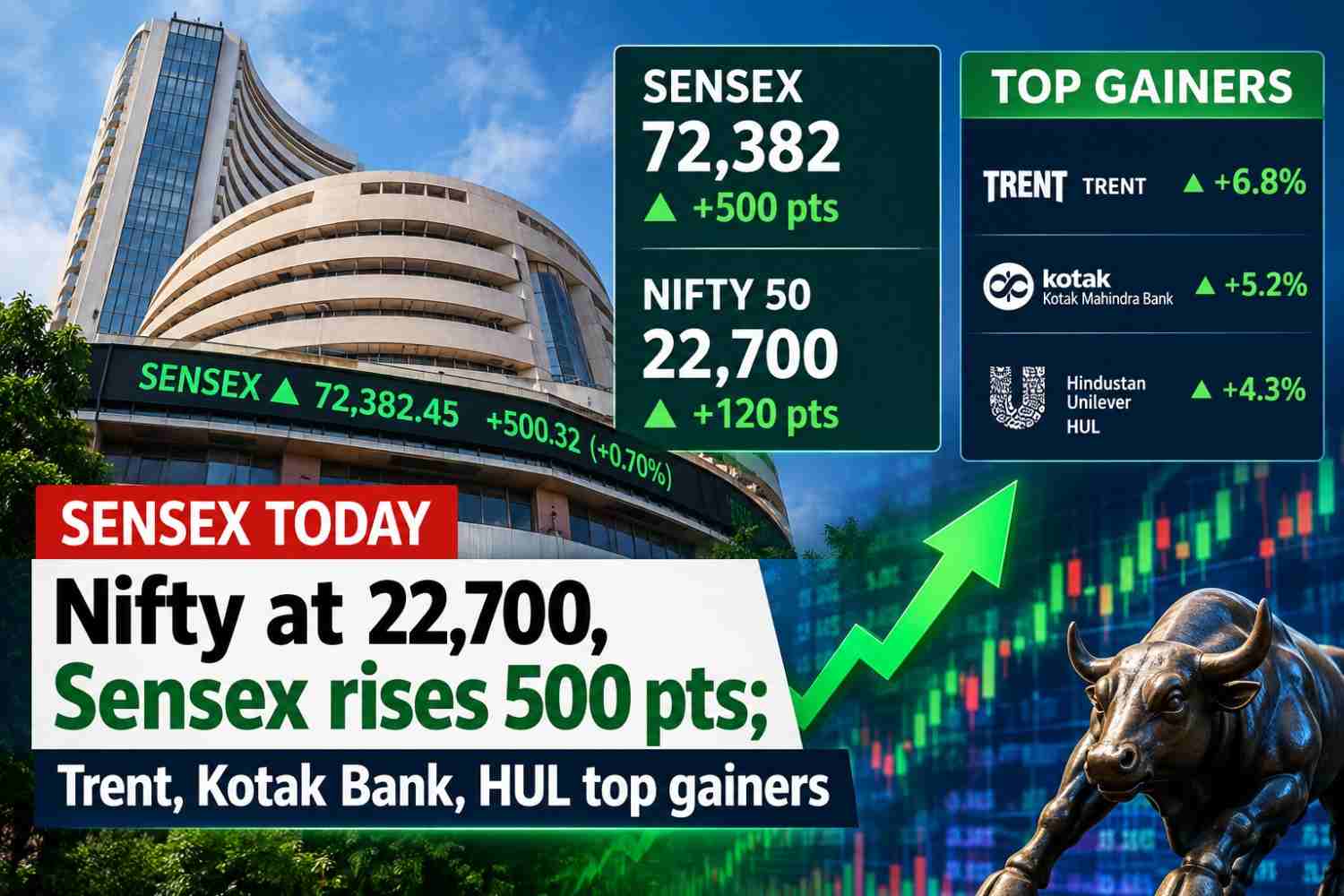
In the Indian market, the Sensex and Nifty IT indices have faced a "double whammy."
Global Sell-off: Tracking the Nasdaq’s volatility.
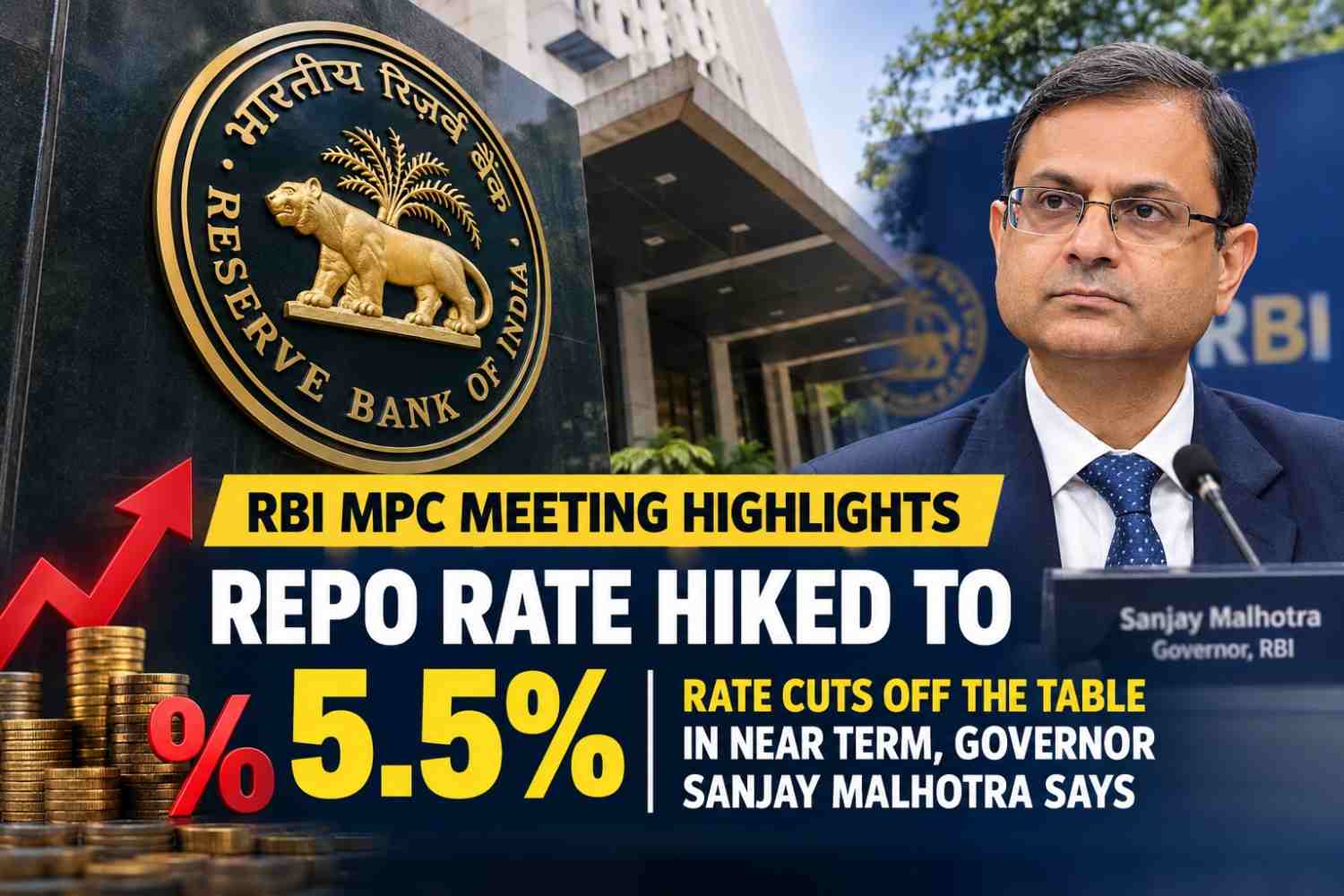
Wait-and-Watch on Interest Rates: Investors are cautious ahead of the RBI’s Monetary Policy Committee (MPC) decisions.
Major players like TCS and Infosys are navigating a shift in demand. The era of "broad pyramid hiring" is over. The new demand is hyper-concentrated in cloud, cybersecurity, and data engineering. Until these firms prove they can pivot their massive workforces to these specialized roles efficiently, their stock prices may remain under pressure.
5. The Outlook: Is the Bottom in Sight?
While the current trend is "down," many analysts believe we are approaching a cyclical bottom.
"2026 is the 'Year of Truth' for AI. We are moving from experimentation to constructing the durable foundations of the digital economy." — Industry Insight
Key Support Pillars for Recovery:
- Cloud 3.0: The shift toward hybrid and sovereign cloud models to support AI privacy will drive a new wave of infrastructure spending.
- Agentic AI: By late 2026, networks of AI agents managing complex workflows (HR, Finance, Legal) are expected to drive the next productivity boom.
- Valuation Realism: The current sell-off is stripping away the "froth," leaving behind companies with scalable models and durable cash flows.
A Market for Investors, Not Gamblers
The "down" trend in IT stocks in early 2026 is a painful but necessary correction. It is a transition from a market driven by narrative to one driven by numbers. For the long-term investor, this period of "dispersion" creates an opportunity to identify the true architects of the next technological era while avoiding the "AI pretenders" whose business models are being eaten by the very technology they tried to leverage.
"The decisions we make today will shape the world for generations to come."