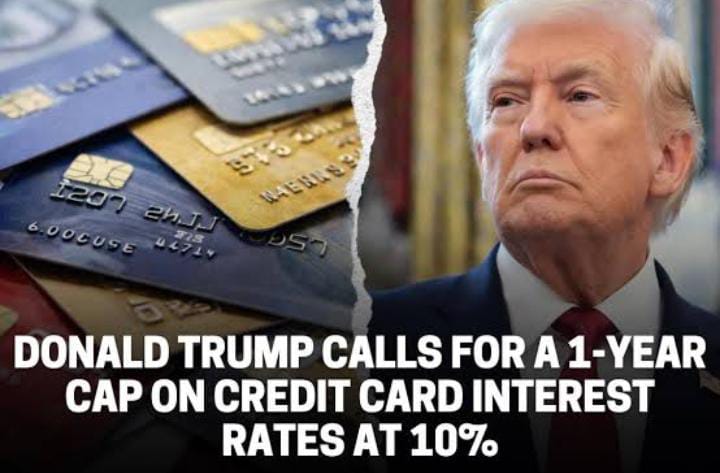
Former US President Donald Trump’s renewed push to cap credit-card interest rates has ignited a nationwide debate on consumer protection, banking profitability, and economic stability. While the proposal is being promoted as a bold move to shield Americans from soaring borrowing costs, economists, financial institutions, and policy experts caution that the plan may lead to unintended and potentially damaging consequences.
Background: Rising Credit Card Debt in the US
Over the past few years, US households have increasingly relied on credit cards to manage higher living expenses caused by inflation, rising rents, and elevated interest rates. Average credit-card interest rates have crossed the 20% mark, making revolving debt more expensive than ever. Against this backdrop, Trump proposed a temporary cap—reportedly around 10%—on credit-card interest rates, framing it as a necessary intervention to protect consumers from what he described as “excessive charges by financial institutions.”
The proposal has strong populist appeal, especially among middle-class and lower-income households struggling with mounting debt. However, the economics of credit-card lending are far more complex than a simple reduction in interest rates.
How Credit Card Lending Works
Credit cards are unsecured loans, meaning they are not backed by collateral. Banks price interest rates based on risk, operational costs, defaults, fraud losses, and regulatory compliance. High interest rates help lenders compensate for customers who fail to repay their balances.
A strict interest-rate cap would significantly reduce revenue from this segment, particularly for customers with weaker credit profiles. As a result, lenders may be forced to reassess who qualifies for credit and under what terms.
Why Experts Say the Policy Could Backfire
One of the biggest concerns is reduced access to credit. If banks are unable to price risk appropriately, they are likely to tighten lending standards. This could mean fewer approvals, lower credit limits, or complete withdrawal of credit cards for higher-risk borrowers.
Ironically, the consumers the policy aims to help may end up excluded from mainstream credit altogether. Instead of affordable credit cards, they could be pushed toward alternative lending options such as payday loans or high-fee installment loans, which often carry even worse financial terms.
Impact on Consumer Benefits and Banking Services
Beyond access to credit, consumers may also lose popular card features. Cashback rewards, airline miles, promotional zero-interest periods, and loyalty programs are funded by interest income and interchange fees. With profit margins squeezed, card issuers may scale back these benefits or introduce new fees to compensate for lost revenue.
Banks could also increase annual fees or reduce customer support services, indirectly increasing the cost of borrowing.
Broader Economic Consequences
Consumer spending accounts for a significant share of US economic growth. Credit cards play a critical role in smoothing consumption, especially during periods of financial stress. If credit availability contracts, spending may slow, affecting retail sales, small businesses, and overall economic momentum.
Financial markets have already shown signs of unease, with bank and financial stocks reacting negatively to discussions around interest-rate caps. Investors fear that prolonged pressure on profitability could weaken the banking sector and reduce its ability to support economic activity.
Legal and Implementation Challenges
Another major hurdle is enforcement. Interest-rate regulation typically requires legislative approval. Without Congressional backing, implementing a nationwide cap through executive action could face legal challenges from lenders and industry groups. This uncertainty adds another layer of risk for financial institutions, potentially amplifying cautious behavior in lending.
Alternative Solutions Suggested by Analysts
Many economists argue that while high credit-card interest rates are a legitimate concern, broad caps may not be the most effective solution. Suggested alternatives include:
Strengthening consumer disclosure and transparency rules
Promoting financial literacy and responsible borrowing
Encouraging competition among lenders
Supporting targeted relief for distressed borrowers
These measures, experts say, could address consumer pain points without disrupting credit markets.
"The decisions we make today will shape the world for generations to come."