The government did not gift you a free UPI. It fenced a playground and left the rest of the market outside the wire.
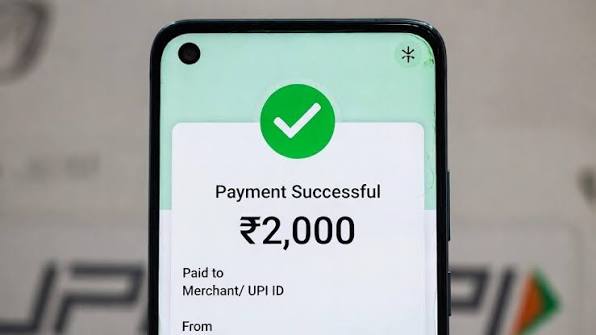
On 14 September 2026 the Finance Ministry’s Department of Financial Services published a gazette under Section 10A of the Payment and Settlement Systems Act, 2007. Two electronic modes are named. One: a debit card powered by RuPay. Two: a Unified Payments Interface transaction up to ₹2,000. On those two, no bank and no system provider shall impose, directly or indirectly, any charge on the person paying or the person receiving.
Read that twice. The sentence that trends as “UPI is free” is the sentence that tells banks where they may start charging the moment the amount crosses two thousand rupees.
This gazette did not fall from the sky. On 6 August the Lok Sabha passed the Taxation and Other Laws (Amendment) Bill, 2026 and rewired the old zero-MDR law. Section 10A used to treat UPI and RuPay as a public utility you could not toll. The amendment turned that utility into a list the Centre can edit by notification. Last month the minister said the consumer would not pay. PhonePe, Razorpay and MobiKwik chiefs, speaking at the same season’s fintech circus, asked for a fee to “fund the next phase.” Banks wanted a pipe that prints money. The September paper is the compromise written in legal ink: protect the tea, the autorickshaw and the neighbourhood kirana; leave the hospital bill, the school fee, the appliance and the marketplace checkout for a later rate card.
Person-to-person transfers remain outside the merchant tax. A son sending ₹5,000 home is still a P2P hop. A customer paying a shop ₹5,000 is not. Officials have said any future merchant discount rate will sit on a limited set of merchant payments above a threshold, at a “nominal” slice far below card MDR. Reports already float 0.4 percent on person-to-merchant UPI above ₹2,000, with talk of targeting merchants in the ₹1–1.5 crore turnover band and splitting the take among the issuing bank, the app and the acquiring bank. NPCI’s steering committee still has to write the arithmetic. The gazette did not wait for that arithmetic. It only painted the floor.
“Indirect” is the word that will matter more than “free.” A bank may not slap a line item on your PhonePe screen for a ₹1,999 scan. A grocer who starts paying MDR on the ₹2,400 cart can raise the sticker by two rupees and call it inflation. That is how a consumer-free rail becomes a household tax without a new cess in the Budget speech. Digital India spent a decade herding cash into QR codes with the promise that the scan would cost nothing. Once the herd was inside the pen, the gatekeepers asked who would fund the servers, the fraud desks and the next advertisement. The answer, dressed as sustainability, is the merchant — which means the price list.
RuPay sits in the same notification without a rupee cap in the quoted text. That is the official card of the same political project: push a domestic network, then protect it in law while the UPI fee debate rages. Visa and Mastercard will watch the split. So will every fintech that built a business on zero interchange and now wants a cut the moment the cart crosses two notes of a thousand.
July’s official count is the scale of the raid-in-waiting. UPI cleared 2,366 crore transactions worth ₹29.9 lakh crore in a single month. Most of those legs are small. The value that will feed a 40-basis-point machine lives in the fat tail — the payments this gazette politely declined to immunise.
The political theatre is familiar. First amend the statute so a charge becomes legal. Then allow a week of panic so the relief notification looks like mercy. Then stand on a podium and say the common man is protected. The common man’s rent, medicine and school fee are not ₹1,999. The system that cannot keep a PF claim moving or a municipal tap running has found the energy to write a precise rupee line across the country’s most used public rail.
Until NPCI publishes the merchant rate, treat every scan above two thousand as a negotiation the shop has not yet had with its bank. Keep P2P for family money. Ask a merchant whether the QR is going to grow a convenience fee after the next circular. And do not confuse a gazette that freezes the floor with a government that refused to sell the floor.
Disclaimer
This is news and analysis, not a fee schedule. MDR rates, merchant thresholds and app-level charges can change after NPCI and government notifications. Verify any deduction on your statement against the 14 September 2026 gazette and subsequent official circulars.
Official sources
Ministry of Finance / Department of Financial Services gazette notification, 14 September 2026 — Section 10A, Payment and Settlement Systems Act, 2007 (RuPay debit cards; UPI transactions up to ₹2,000; no direct or indirect charge by bank or system provider)
Taxation and Other Laws (Amendment) Bill, 2026 — amendment to Section 10A of the Payment and Settlement Systems Act, 2007 (passed Lok Sabha, 6 August 2026)
Finance Ministry / Finance Minister statements, August 2026 — consumers not to be charged; any MDR limited to select merchant transactions above a threshold; P2P to remain free
"The decisions we make today will shape the world for generations to come."