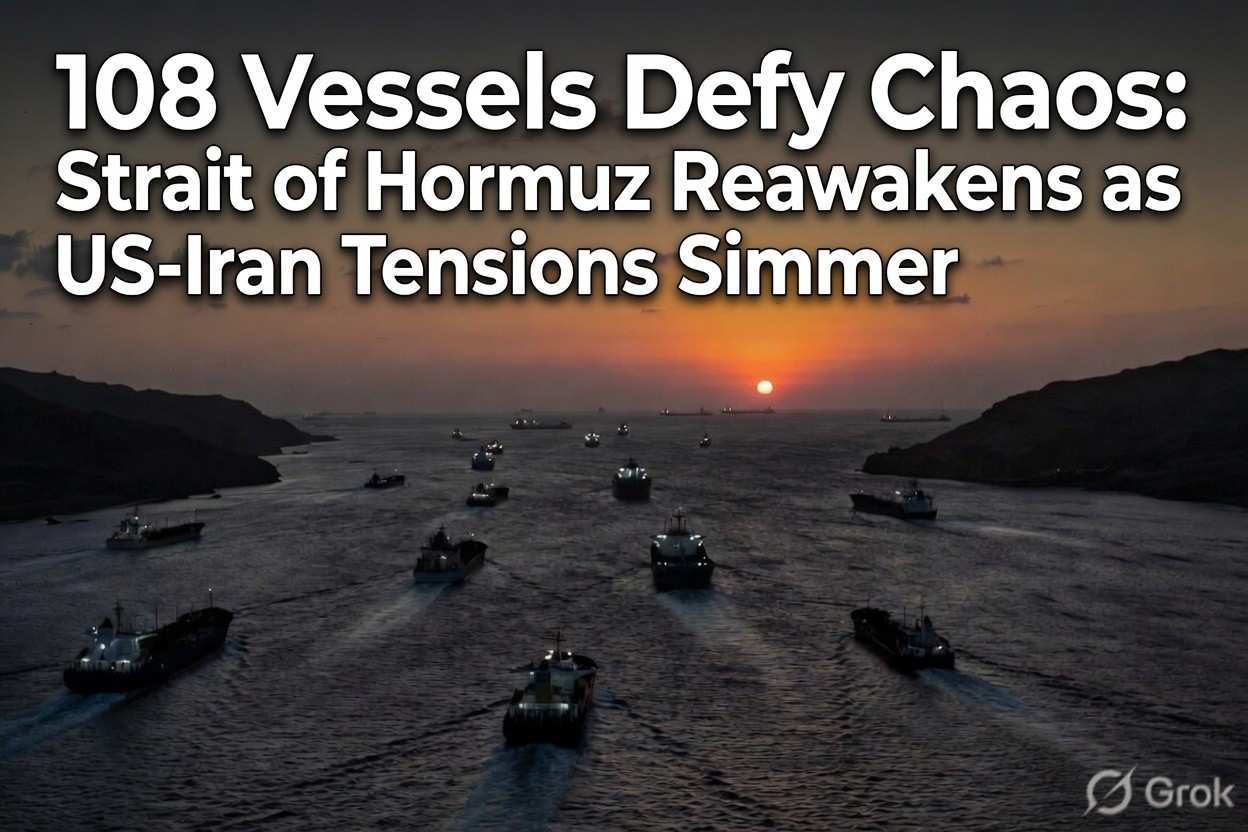
In a striking display of resilience amid ongoing volatility, 108 vessels crossed the Strait of Hormuz over the weekend, according to maritime analytics firm Kpler. This uptick comes even as fresh US-Iran frictions, including retaliatory strikes and Iranian warnings about approved routes, threatened to choke one of the planet's most vital shipping lanes once again.
The Strait, a narrow passage between Iran and Oman, has long been the lifeline for roughly 20% of global oil and liquefied natural gas supplies. Before the 2026 Iran conflict escalated in late February, daily transits often exceeded 100-125 vessels. Disruptions from attacks, blockades, and heightened insurance risks had slashed that dramatically, trapping hundreds of ships and sending shockwaves through energy markets. Yet this latest weekend surge—spanning Friday to Sunday—marks a notable recovery, with more ships entering the Persian Gulf than exiting in recent days, hinting at cautious optimism among operators.
What drove this movement? A mid-June US-Iran memorandum of understanding provided a temporary 60-day window for fee-free transits and aimed to stabilize shipping after months of tit-for-tat actions. Iran had asserted control, attacking vessels straying from its designated paths and coordinating some safe passages via the IRGC. The US responded with targeted strikes on Iranian assets. Despite these clashes spilling into the weekend, commercial imperatives—and perhaps diplomatic backchannel assurances—pushed traffic higher than the lows seen during peak hostilities.
For context, this isn't a full return to normalcy. Pre-war volumes were far higher, and analysts note persistent challenges: lingering mine risks, elevated war-risk insurance premiums (sometimes exceeding 25% of cargo value in prior spikes), and geopolitical uncertainty. Iran continues issuing stern warnings, while US officials emphasize freedom of navigation. The rebound, however, has already eased pressure on global supplies, with more tankers clearing backlog from Gulf producers like Saudi Arabia, UAE, and Qatar.
The implications ripple far beyond the Gulf. Easing flows have helped pull oil prices back toward pre-war levels, with benchmarks like Brent and WTI stabilizing around $70-75 per barrel ranges in recent trading—off their wartime peaks. This offers relief for importers like India, heavily reliant on stable Middle East energy, and supports broader economic stability amid inflation concerns. OPEC+ pledges for increased output add further downward pressure.
Yet caution prevails. The Strait's fragility was evident in recent incidents, including strikes on vessels like Qatari-linked tankers. Full normalization could take weeks or months due to logistics, crew rotations, and clearance operations. For India and emerging markets, sustained disruptions historically translate to higher fuel costs, inflation, and slower growth—factors closely watched by traders and policymakers.
This episode underscores deeper realities: the Strait remains a high-stakes lever in US-Iran dynamics, intertwined with nuclear talks, regional alliances, and energy security. While the weekend's 108 crossings signal that commerce refuses to halt entirely, they also highlight how quickly tensions can flare. Diplomatic progress in Doha and elsewhere offers hope, but markets and shippers must navigate a landscape where one incident could reverse gains.
Observers see this as a test of the fragile post-memorandum framework. Increased traffic reassures energy-dependent economies, but underlying risks—from mines to miscalculations—demand vigilance. For now, the movement of these vessels represents not just trade resuming, but a tentative bet on stability in one of the world's most contested waterways.
"The decisions we make today will shape the world for generations to come."