The conflict between Iran and Israel has entered a more dangerous phase after reports that Iranian forces have deployed cluster-munition warheads on ballistic missiles, raising alarm among military analysts and humanitarian groups.
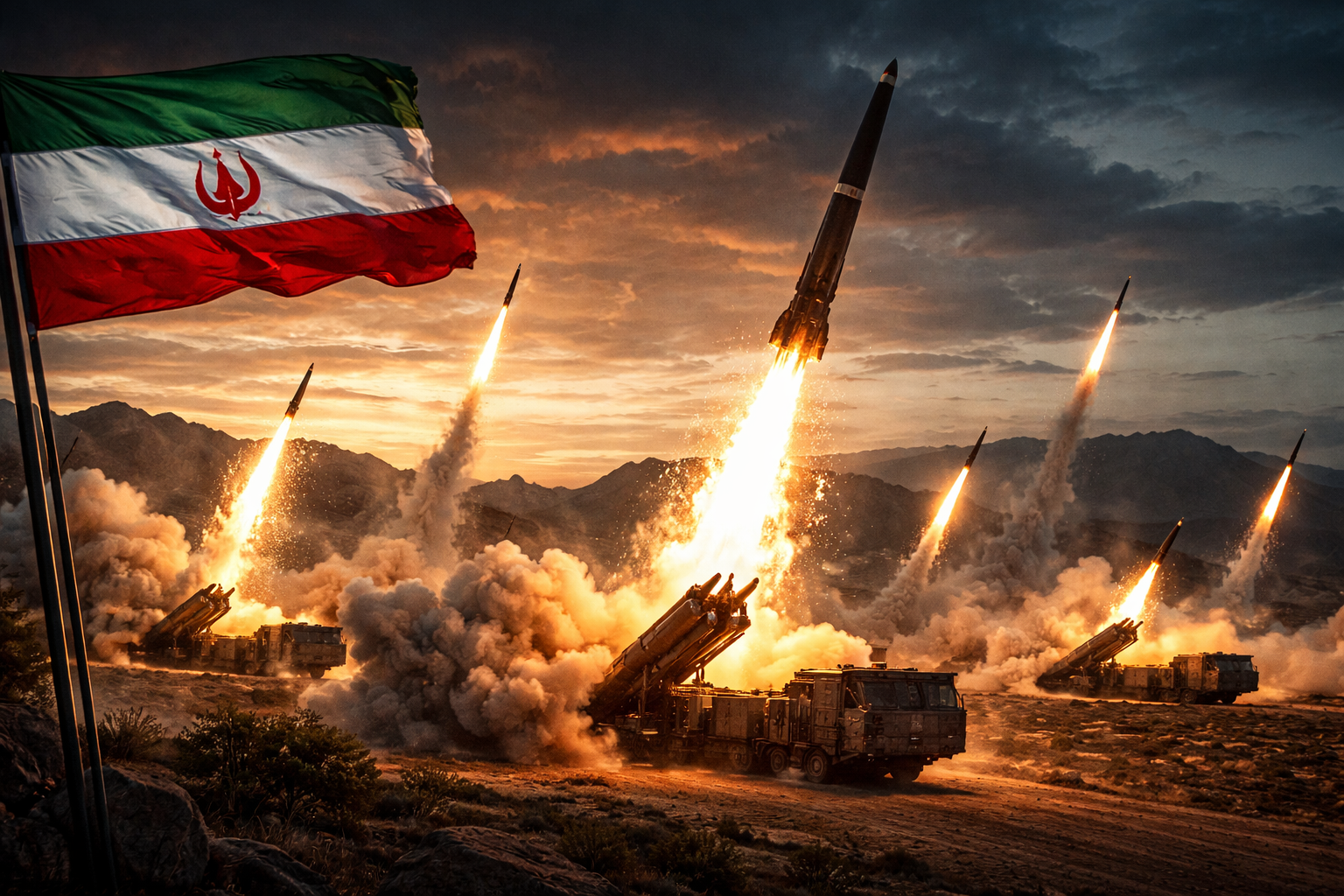
According to Israeli military officials, several missiles launched toward Israeli territory in recent days carried cluster payloads. Unlike conventional ballistic missiles that detonate with a single large explosion, cluster missiles split open mid-air and release dozens of smaller explosives—known as submunitions—over a wide area.
These submunitions are designed to spread across several kilometers, dramatically increasing the area of impact and making it harder for missile-defense systems to intercept every explosive device. Some reports indicate that a single warhead can disperse around 80 bomblets after breaking apart at high altitude, potentially affecting large urban zones.
The reported use of cluster warheads comes amid a broader escalation in hostilities between Iran and Israel, which intensified following a series of retaliatory strikes and regional military operations. Analysts say the introduction of such weapons reflects a tactical shift by Tehran toward wide-area saturation attacks rather than precision strikes, increasing both the destructive potential and the humanitarian risks of the conflict.
Israeli officials have strongly condemned the deployment of cluster munitions, arguing that their dispersal pattern can endanger civilian populations. Because many of the bomblets do not explode on impact, they can remain on the ground as unexploded ordnance, posing long-term threats to residents, emergency responders, and reconstruction efforts.
Military analysts also note that Iran possesses several missile systems capable of carrying cluster warheads, including variants from the Zolfaghar, Qadr, and Khorramshahr missile families, some with ranges approaching 2,000 kilometers.
The emergence of cluster missile strikes has further intensified international concern over the widening regional conflict. Governments and defense observers warn that if such weapons continue to be used, the confrontation could escalate into a broader regional crisis affecting multiple Middle Eastern states and global security dynamics.
Conclusion
The reported use of cluster-munition missiles represents a significant and controversial development in the Iran–Israel confrontation. Beyond the immediate military impact, such weapons raise serious humanitarian and strategic concerns due to their wide-area effects and the long-term dangers posed by unexploded submunitions.
As the conflict continues to evolve, the deployment of these weapons is likely to intensify global scrutiny and diplomatic pressure. Whether the situation stabilizes or escalates further may depend not only on military developments, but also on international efforts to prevent the conflict from expanding into a broader regional crisis.
"The decisions we make today will shape the world for generations to come."