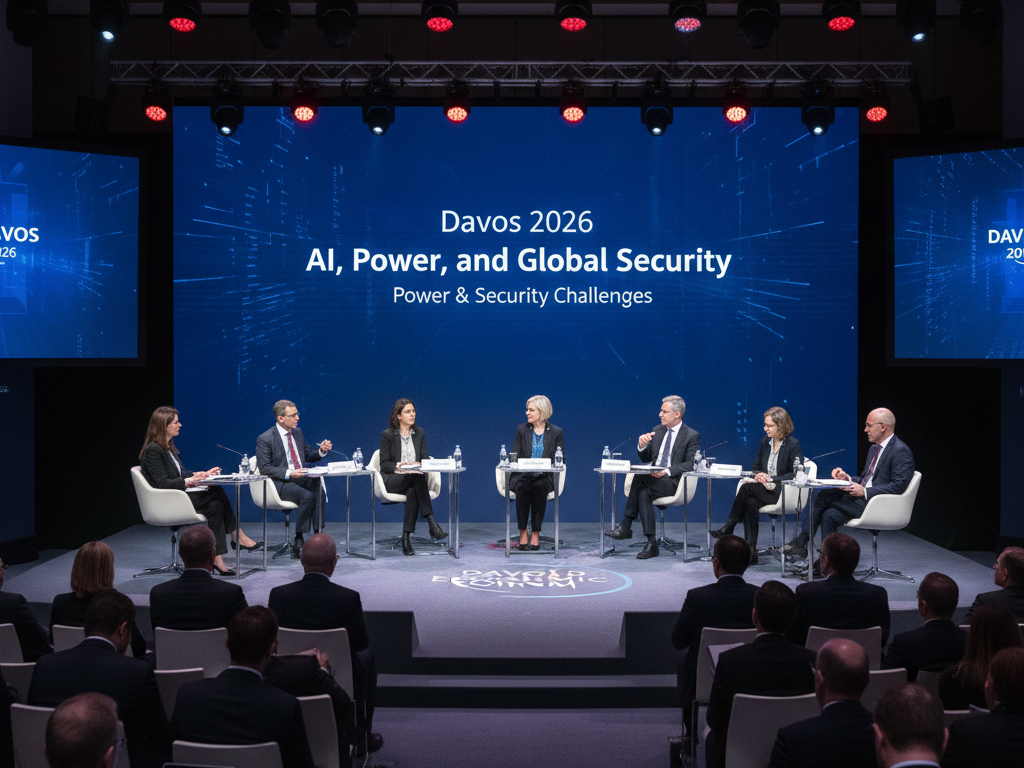
The World Economic Forum's 56th Annual Meeting in Davos, Switzerland, opened on January 19, 2026, under the theme "A Spirit of Dialogue," drawing nearly 3,000 leaders from over 130 countries. Technology executives declared 2026 the pivotal year for AI shifting from experimentation to large-scale production, but warned of critical constraints in power, cybersecurity, and enterprise readiness. Cisco's President and Chief Product Officer Jeetu Patel highlighted insufficient power, compute, network bandwidth, trust issues, and data gaps as primary bottlenecks driving investments.
Energy Shortages Hit US and India Hard
Emerald AI CEO Varun Sivaram warned that 2026 marks when power bottlenecks "really bite" for AI, with the US planning 50 gigawatts of data centers over three years but only able to connect 25 gigawatts to grids; similar issues plague India. China stands apart, projected to have 400 gigawatts of spare capacity by 2030 for AI. Emerald AI is developing power-flexible systems to enable faster grid connections in months rather than years.
Cyber Risks from AI Surge Globally
The WEF's Global Cybersecurity Outlook 2026 reports AI as the top cybersecurity change driver for 94% of respondents, with 87% viewing AI vulnerabilities as the fastest-growing risk, shifting focus to data leaks in generative AI. Check Point CTO Jonathan Zanger stressed doubling down on secure AI investments, now a top board priority.[conversation_history] Sessions address "Shadow AI"—unmonitored models and agents—intensifying governance and accountability risks.
Leaders Reject AI Bubble Narrative
OpenAI's Chief Global Affairs Officer Christopher Lehane dismissed bubble fears, calling AI a "general-purpose technology" like electricity or semiconductors, with 850 million users, 4 million developers, and 1 million companies integrating it, yielding seven-fold productivity gains. Cerebras CEO Andrew Feldman echoed this, stating AI diffusion through economies is not hype but users demanding faster inference. The "capability gap" risks widening divides between AI adopters and laggards in healthcare, education, and government.
Path Forward: Governance and Scaling
WEF estimates AI could add $15.7 trillion to global GDP by 2030, contingent on resolving these hurdles.[conversation_history] Executives like TCS CEO K. Krithivasan note AI doubling compute every three months amplifies cybercrime risks, urging global standards. As of January 20, 2026, discussions continue through January 23, with record participation from 65 heads of state and 850 CEOs focusing on ethical AI deployment.
"The decisions we make today will shape the world for generations to come."