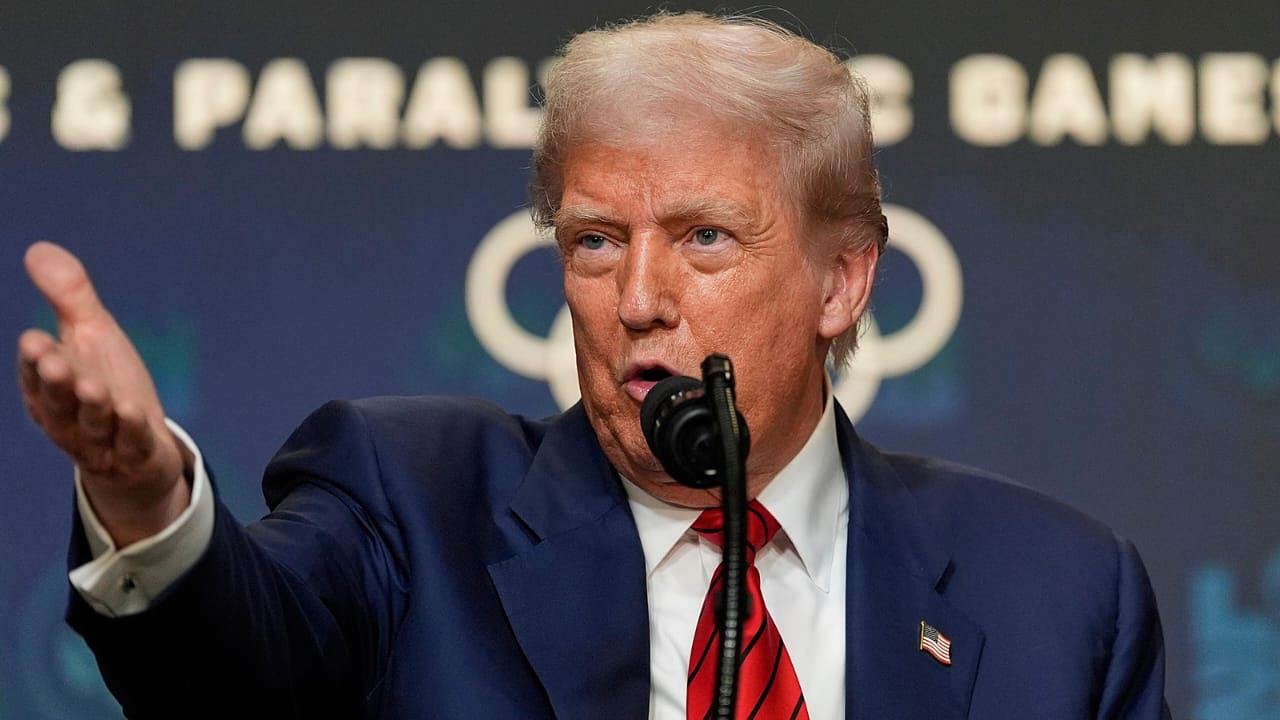
Former U.S. President Donald Trump has withdrawn his threat to impose tariffs on several European countries, easing concerns over rising trade and diplomatic tensions linked to the Greenland issue. The decision came after Trump said a framework agreement had been reached with the NATO chief regarding Greenland, reducing the need for punitive trade measures.
Background: Why Greenland Matters
Greenland holds significant strategic and geopolitical importance, particularly in the Arctic region. Its location is critical for defense, missile monitoring, and future trade routes as polar ice melts. Over the years, the region has attracted growing interest from major global powers, including the United States, Russia, and China.
Trump has long argued that Greenland is vital to U.S. national security interests. However, Denmark and other European nations, which have sovereignty ties to Greenland, have consistently rejected any suggestion of U.S. control, leading to diplomatic friction.
Tariff Threat Raised Concerns in Europe
Earlier, Trump had warned that the United States could impose a 10% tariff on imports from eight European countries if they failed to cooperate on issues related to Greenland. This warning triggered concern across Europe, as such a move risked escalating trade tensions between long-standing allies.
European leaders criticized the tariff threat, warning that it could undermine global trade stability and strain transatlantic relations.
Framework Deal Leads to Policy Shift
The situation shifted after Trump announced that a framework understanding with NATO leadership had been achieved on Greenland-related security and cooperation matters. Following this development, he confirmed that the tariff threat would be withdrawn.
Analysts view this as a diplomatic de-escalation, signaling a preference for negotiation over confrontation.
Impact on Global Markets
The announcement had an immediate effect on global financial markets:
The U.S. dollar strengthened, supported by reduced fears of a trade conflict.
Safe-haven assets such as gold and the Swiss franc weakened as investor risk appetite improved.
The Australian dollar jumped, aided by both improved global sentiment and strong domestic employment data.
Equity markets showed positive momentum as uncertainty eased.
Trade Policy and Geopolitics Intersect
Market experts note that this episode highlights how geopolitical developments can directly influence trade policy and investor sentiment. The initial tariff threat fueled market volatility, while its withdrawal restored confidence and stability.
What Lies Ahead
While the immediate risk of tariffs has been removed, analysts caution that Arctic geopolitics and Greenland’s strategic role will remain a sensitive topic. Future U.S.–Europe relations will depend on how the announced framework agreement is implemented and whether cooperation continues smoothly
"The decisions we make today will shape the world for generations to come."