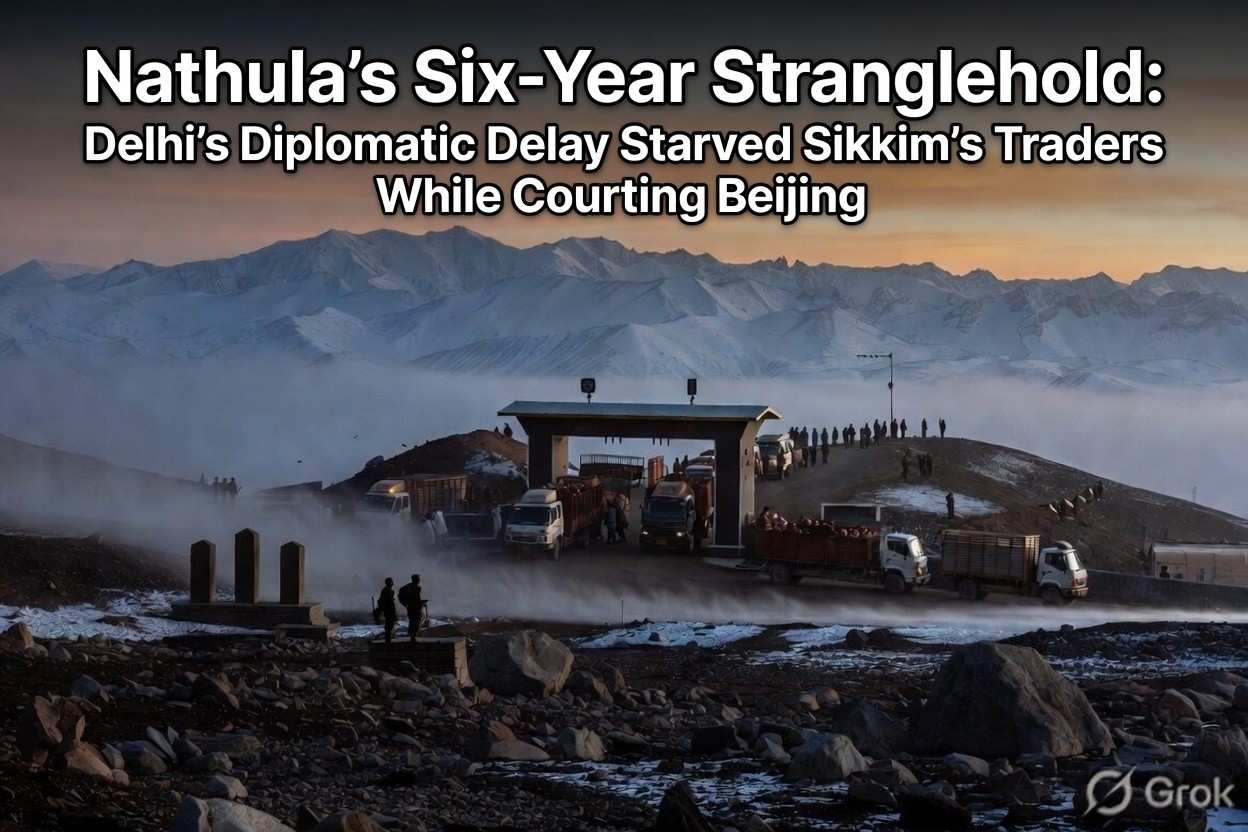
The gates at Nathula will creak open on August 1. After more than six years of enforced silence, India and China have agreed to restart limited border trade through the historic pass in East Sikkim. Officials and local leaders are already describing it as a major boost for the state’s border economy. Nearly 600 registered Indian traders are being told relief is finally at hand.
That narrative is incomplete. It paper-overs a brutal record of neglect.
Trade through Nathula was suspended in 2020. The official reason was COVID-19. The real trigger that kept it shut was the violent clash in Galwan Valley and the subsequent freeze in India-China relations. The ancient route, once a vital artery of the Silk Road and formally reopened only in 2006 after the 1962 war, was sacrificed without a clear timeline or compensation plan for the people whose livelihoods depended on it.
Peak formal trade reached ₹82.68 crore in 2016. The Doklam standoff in 2017 already slashed that figure dramatically. Then came the total shutdown. Traders who had left government jobs, sold land, or taken loans to invest in the seasonal commerce found themselves without alternatives. Barter deals remained unsettled. Goods were stranded. Families in the highlands around Changgu and further into North Sikkim watched their primary source of income vanish while the central government focused on larger geopolitical posturing.
The decision to reopen finally came during the 24th round of Special Representatives talks in August 2025 between National Security Advisor Ajit Doval and Chinese Foreign Minister Wang Yi. Agreement was also reached for the other two traditional points — Shipki La in Himachal and Lipulekh in Uttarakhand. Yet even after that high-level understanding, the actual start date for Nathula slipped from the June 1 target announced earlier by Sikkim Chief Minister Prem Singh Tamang to August 1. No transparent explanation has been offered for the further delay. Infrastructure readiness, security clearances, and coordination with the Chinese side were cited in similar cases at other passes. The pattern is familiar: announcements first, details later, local pain ignored in between.
Worse, the structural problems that made the trade barely viable even before 2020 remain untouched. Only 36 items can be exported from the Indian side and 20 imported from the Chinese side. The lists date back decades and are widely described by traders and even some officials as obsolete. Yak tails, borax, certain traditional textiles and limited agricultural products still dominate. High-demand modern goods that actually move informally are kept off the official schedule. Sikkim governments and trader associations have repeatedly asked New Delhi to revise the lists. The requests have been met with silence or bureaucratic deflection. The result is a trade that generates thin margins after transport costs, weather disruptions, and short operating windows (typically May to November, restricted days and hours).
Roads remain fragile. Landslides on the approach routes are routine. An alternative highway is under construction but not yet ready. Trade posts on the Indian side have long suffered from inadequate facilities. None of these issues required Chinese cooperation to fix. They required political will and administrative priority from the Centre. That will never materialised in the years when the pass was closed.
This is not merely a local economic story. Border communities that feel abandoned do not strengthen national security. They become the weakest link. When livelihoods collapse in the high Himalayas, younger people leave. Traditional knowledge of the terrain and the routes fades. The state’s capacity to hold the frontier through economic presence, not just military posts, erodes. Delhi has spent years talking about strategic infrastructure and Act East. At Nathula it allowed a working commercial link to atrophy for six years and then returned it in almost the same restricted, outdated form.
The reopening of the Kailash Mansarovar Yatra through the same pass earlier this year was celebrated as a confidence-building measure. Trade, which actually sustains families year after year, received far less urgency. That ordering of priorities reveals the true face of the system: symbolic gestures for external audiences, prolonged indifference toward the citizens living on the actual border.
August 1 will bring some activity. Trucks will move. A few hundred traders will restart limited exchanges. Local markets near the pass will see temporary energy. None of that erases the damage already done or the unresolved structural failures. Until the list of tradable items is modernised, infrastructure is made reliable, and the Centre treats Himalayan border economies as strategic assets rather than afterthoughts, Nathula’s reopening will remain a half-measure.
The nation cannot afford frontiers that are kept quiet only when convenient and left economically hollow the rest of the time. Sikkim’s traders paid the price for six years. The system that allowed it continues to operate exactly as before.
"The decisions we make today will shape the world for generations to come."