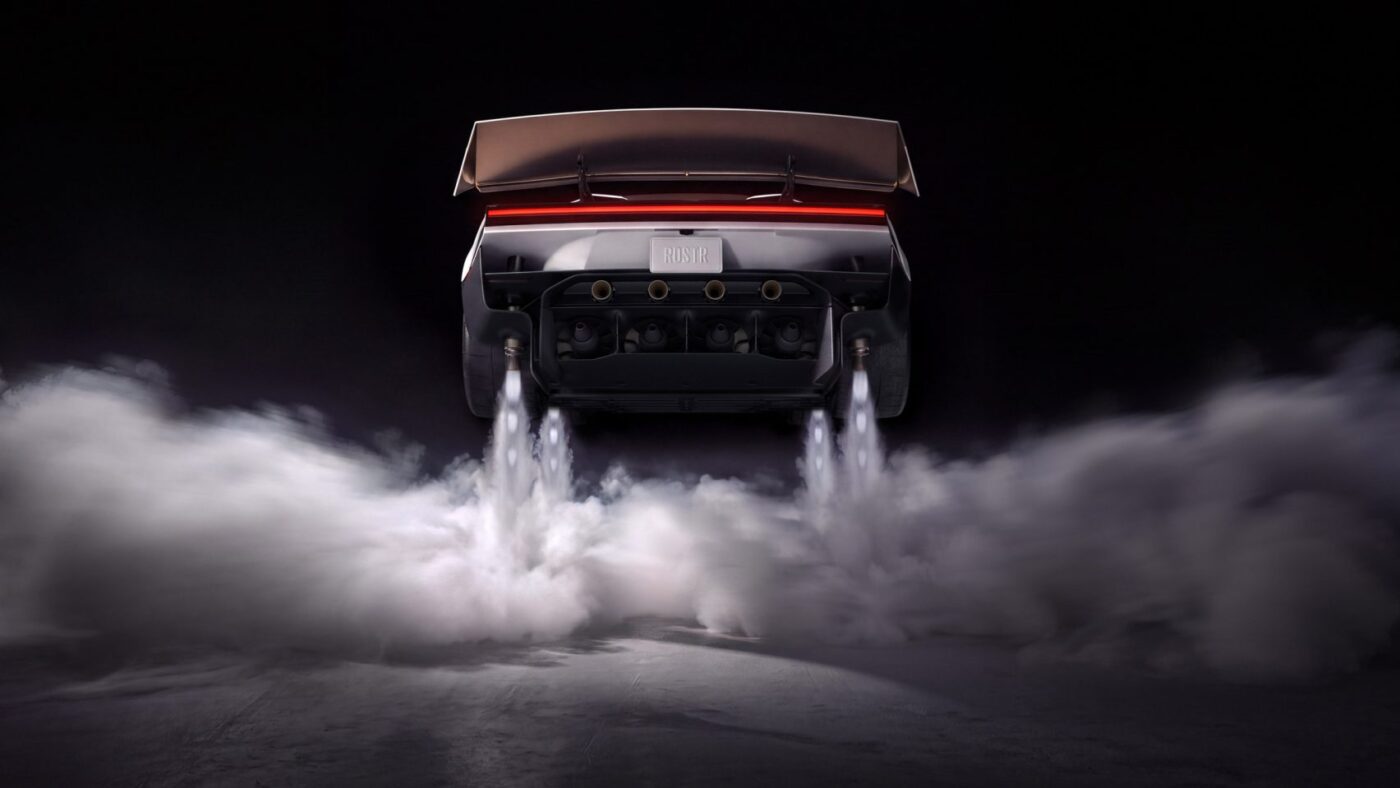
Tesla just pulled the curtain on its second-generation Roadster and the world watched a car drive upside down, flip mid-air, and land on cold-gas thrusters developed with SpaceX. Zero to 60 mph in under a second. Top speed north of 230 mph. Three variants: road-ready Performance, race-ready Thrust, and invitation-only Rocket that literally lifts off. Production promised for 2028. Reservations reopened. In India, the Performance version already demands an initial ₹5.01 lakh followed by another ₹45 lakh within ten days. The Thrust version asks for roughly ₹2.5 crore just to hold a place.
This is not a concept. This is the final human-driven halo car Tesla intends to build before it fully pivots to robotaxis and humanoid robots. Nine years after the first prototype, after endless delays and deposit money sitting idle, the car finally appeared at a SpaceX test site in Texas and performed stunts that make every other electric sports car look like a golf cart.
And India? We are invited to pay the deposit. That is the full extent of our participation.
While Elon Musk demonstrates technology that borders on science fiction, the Indian state continues its familiar performance of empty slogans and lethal incompetence. Successive governments have spent years preaching “EV revolution,” “Atmanirbhar,” and “Make in India.” The result is a thicket of import duties that can push a high-end electric vehicle well past 100 percent effective taxation, a regulatory maze that treats advanced safety and propulsion systems as foreign threats, and roads so broken that a car capable of 370 km/h would destroy itself before it cleared the first city limit.
The same system that cannot guarantee uninterrupted power for charging stations, cannot enforce basic emission norms without selective blindness, and cannot stop middlemen from strangling genuine manufacturing is suddenly expected to welcome a vehicle with thrusters. Street legality of the flying versions is already an open question even in the United States. In India it is a non-starter. The Rocket trim is invitation-only and not approved for public roads. The Thrust version’s acceleration package will face the same bureaucratic wall that has delayed or killed every ambitious mobility project that did not come with the right political connections.
Reservation holders from 2017 are still waiting. Many have already walked away after years of broken timelines. Tesla itself admits it cannot guarantee delivery dates. Yet Indian buyers are being asked to lock in crores of rupees today for a car that may not arrive until the end of the decade, if at all, and may never be usable on the roads their taxes supposedly maintain.
This is the true face of the system. It extracts capital from citizens for the privilege of waiting while the rest of the world moves on. It celebrates foreign innovation in press releases and then taxes and regulates it into irrelevance. It talks about green mobility while protecting the same old networks that profit from inefficiency.
The Roadster is not just a car. It is a mirror. One side shows what private engineering and relentless iteration can achieve. The other side shows a government still stuck in the last century, more skilled at collecting deposits of public hope than at delivering any actual future.
Sources: Tesla official reveal event and website (15–16 October 2026); Reuters, TechCrunch, Wired, CNBC, HT Auto, Spinny reporting on the unveil, specifications, and India reservation details.
Disclaimer: This article is for informational purposes only and does not constitute financial, investment, or purchase advice. Vehicle availability, pricing, and regulations are subject to change.
"The decisions we make today will shape the world for generations to come."