1. The David vs. Goliath Moment: A 6-3 Judicial Earthquake
On February 20, 2026, the US Supreme Court delivered a historic blow to President Donald Trump’s economic strategy. In a 6-3 majority verdict, the Court ruled that Trump’s sweeping "Global Reciprocal Tariffs" were unconstitutional. Chief Justice John Roberts clarified that the power to tax belongs solely to Congress, not the President—effectively stripping the White House of its most powerful trade weapon.
2. The Legal Architect: Neal Katyal’s "Total Victory"
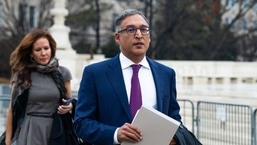
Indian-American lawyer Neal Katyal, representing a coalition of small businesses, emerged as the man who stopped the Trump trade war in its tracks. Standing outside the Court, Katyal proclaimed, "I have the best legal team," emphasizing that even the world’s most powerful leader cannot override the Constitution. His team argued that Trump exceeded his authority under emergency laws (IEEPA), and the Court agreed, handing the administration its biggest legal setback since 2025.
3. The $133 Billion Question: A Massive Refund Crisis?
The ruling has created a financial nightmare for the White House, as it invalidates over $133 Billion in tariffs already collected. While legal experts predict years of courtroom battles over refunds, the immediate impact is a relief for global exporters. For India, this means 55% of exports—previously staring at an 18% duty—might now only be subject to standard MFN (Most Favored Nation) rates, providing a massive competitive boost to Indian MSMEs.
4. Revenge of the Oval Office: The 10% "Stop-Gap" Tariff
Furious at the "humiliation," President Trump immediately signed a new executive order under Section 122 of the Trade Act. He slapped a temporary 10% global tariff on all countries for a 150-day period as a "revenge" move. Despite the Court's rebuke, Trump insisted, "Nothing changes; they will pay," signaling that while he lost this round in court, the trade war is far from over.
Key Takeaways for Your Feed:
1.The Winner: Neal Katyal and the US Constitution.
2.The Victim: Trump’s reciprocal 18%–50% tariff structure.
3.The New Reality: A temporary 10% global duty while the White House hunts for new legal loopholes.
"The decisions we make today will shape the world for generations to come."