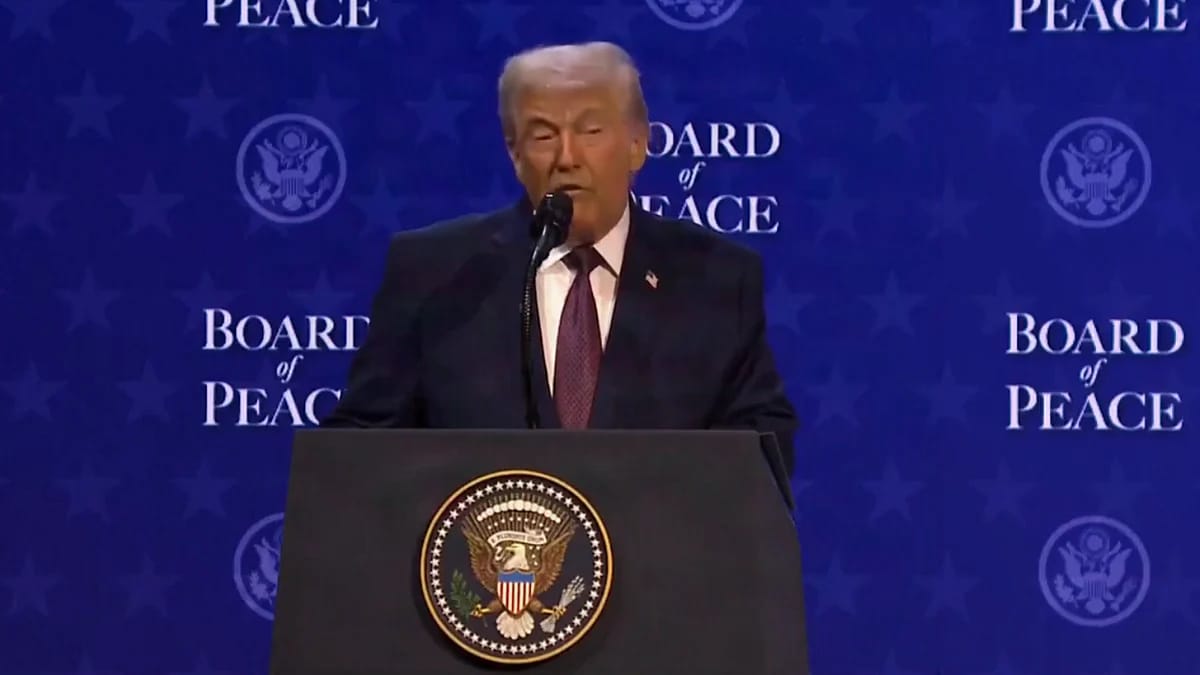
In a high-profile announcement at the World Economic Forum in Davos on January 22, 2026, former U.S. President Donald Trump unveiled the “Board of Peace”, a newly formed international initiative aimed at addressing the ongoing humanitarian and political crisis in Gaza. The initiative brings together a coalition of countries, with Pakistan confirmed as one of the initial members, signaling a significant diplomatic outreach in the region.
The Board of Peace is envisioned as an independent platform that complements existing international efforts, including those led by the United Nations, to stabilize Gaza, facilitate humanitarian aid, and lay the groundwork for long-term political solutions. Trump, who will serve as the chairman, emphasized that the board aims to create practical, actionable solutions for conflict resolution and regional development.
Objectives of the Board
The newly launched board has outlined several key goals:
Establish and maintain a sustainable ceasefire in Gaza.
Coordinate humanitarian assistance and aid delivery efficiently.
Support economic reconstruction and infrastructure rebuilding in conflict-affected areas.
Encourage political dialogue among local and international stakeholders to promote long-term peace.
Trump described the initiative as a way to “bring stability where traditional diplomacy has often fallen short”, emphasizing the board’s role as a facilitator rather than a replacement for the United Nations.
Membership and Global Reactions
The board has attracted participation from a mix of countries across the Middle East and beyond, including Pakistan, Saudi Arabia, Turkey, Egypt, Jordan, Qatar, the UAE, and Indonesia. Several European nations, including France, the United Kingdom, and Nordic countries, have opted to stay out of the initiative, citing concerns about legitimacy and the board’s alignment with international frameworks.
While Pakistan’s government expressed support for the initiative, highlighting the potential to increase humanitarian support and assist in Gaza’s reconstruction, critics have questioned whether the board could influence UN-led processes and whether it may politicize humanitarian aid.
Controversy and Criticism
Despite its ambitious goals, the Board of Peace has faced skepticism from some quarters. Analysts argue that the initiative could be perceived as U.S.-led diplomacy overshadowing established multilateral mechanisms, particularly the United Nations. European nations have voiced concerns about the board’s structure and decision-making authority, while some observers are monitoring whether it could shift the balance of influence in regional politics.
Looking Ahead
The Board of Peace is in its initial stages, with Trump at the helm and a select executive committee, including prominent international figures, advising on strategic direction. The initiative will reportedly begin with focused projects in Gaza, including infrastructure support, humanitarian relief, and conflict mediation programs.
Although the board has stirred debate over its role in global diplomacy, it represents a unique attempt at multilateral collaboration, signaling a new model of conflict intervention where traditional frameworks face limitations.
"The decisions we make today will shape the world for generations to come."