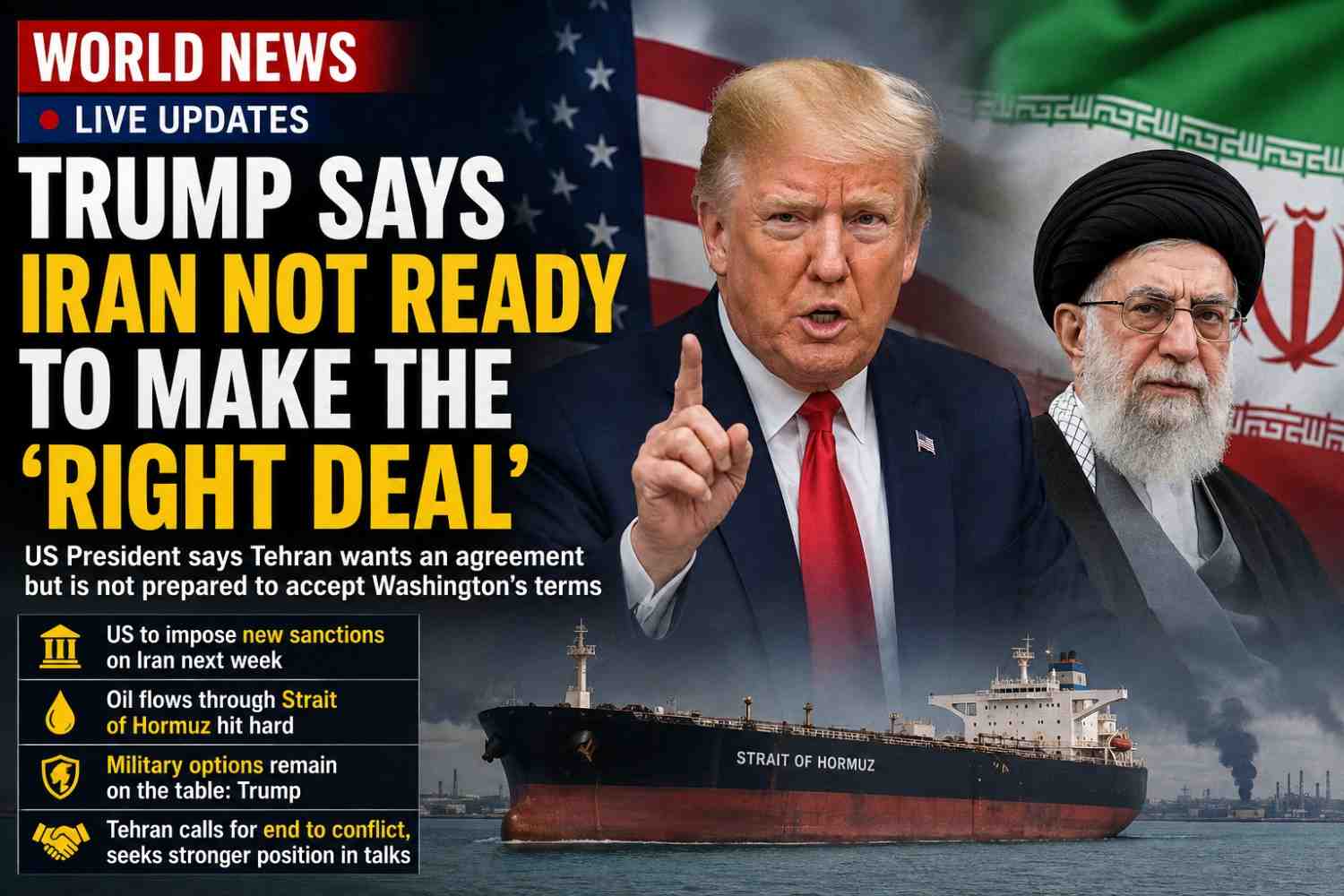
US President Donald Trump has said Iran is interested in reaching an agreement with Washington but is not yet prepared to make what he described as the “right deal.” His comments come as tensions between the United States and Iran remain high and Washington prepares additional economic measures against Tehran.
Speaking to reporters before travelling to South Carolina, Trump said Iran “would love to make a deal” but, in his assessment, was not ready to accept the terms required by the United States. He indicated that Washington would continue watching the impact of its economic pressure on Iran.
The US administration is preparing another major round of sanctions. Treasury Secretary Scott Bessent is expected to announce new measures on Monday, which Washington has described as some of its toughest economic action against Iran. The move is aimed at increasing pressure on Tehran to change its position and return to negotiations.
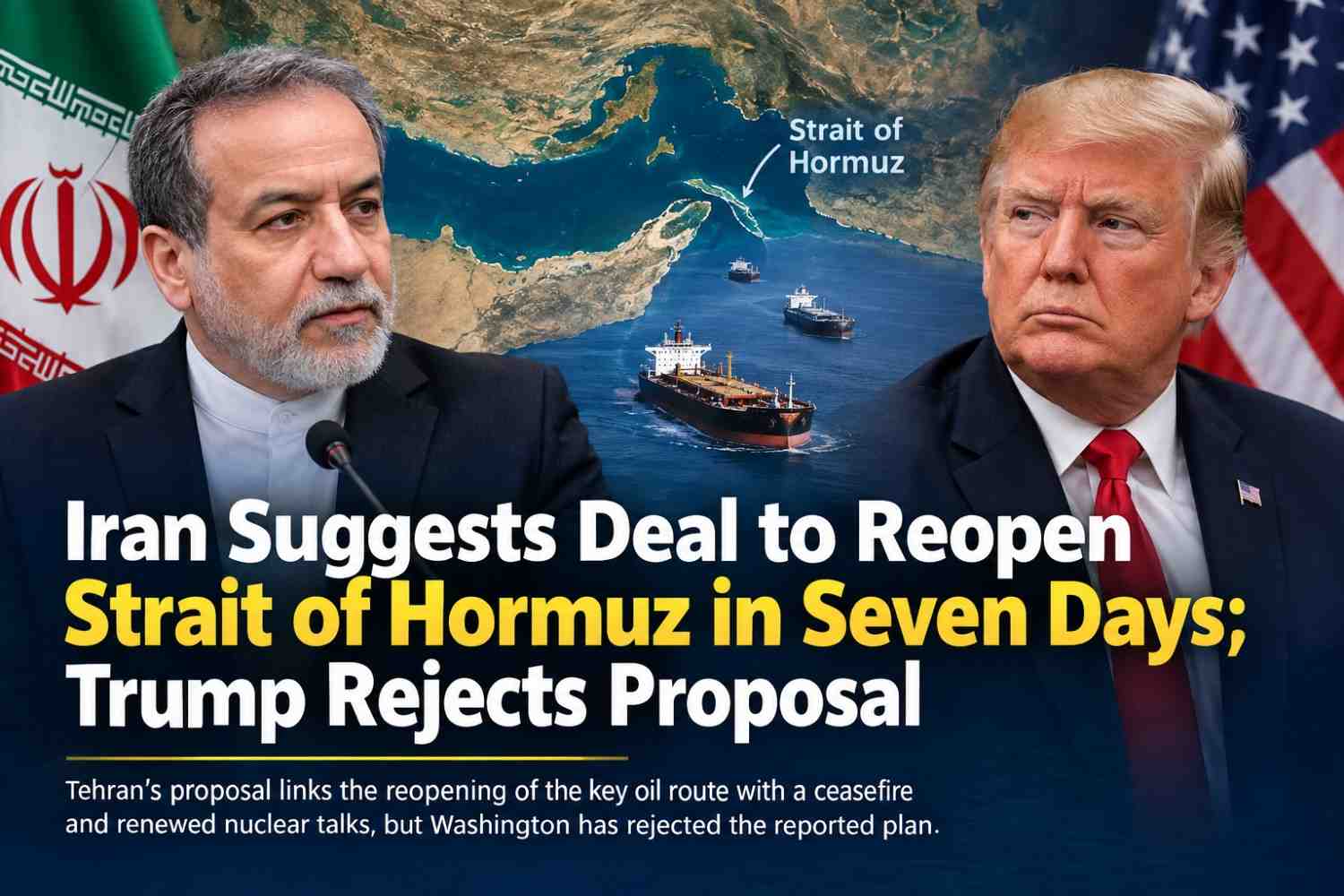
The dispute is also closely linked to the strategic Strait of Hormuz, a critical route for global energy shipments. Shipping through the waterway has fallen sharply amid the continuing conflict and security concerns. Reuters reported that oil flows through the strait have been severely disrupted, raising concerns about global energy supplies and prices.
Trump has maintained that the United States has significant control over the region around the Strait of Hormuz and has kept military options open while pursuing economic pressure. Iran, meanwhile, has rejected Washington’s approach and criticized the planned sanctions as unlawful economic pressure.
Iranian President Masoud Pezeshkian has called for an end to the conflict while arguing that Tehran should negotiate from a position of strength. However, disagreements over sanctions, the Strait of Hormuz and broader security issues continue to make a diplomatic breakthrough difficult.
With the conflict approaching six months and economic pressure mounting, the latest statements from Washington and Tehran suggest that a comprehensive agreement remains uncertain. Markets and governments around the world are closely watching developments because prolonged disruption in the Middle East could further affect oil supplies, shipping and the global economy.
"The decisions we make today will shape the world for generations to come."