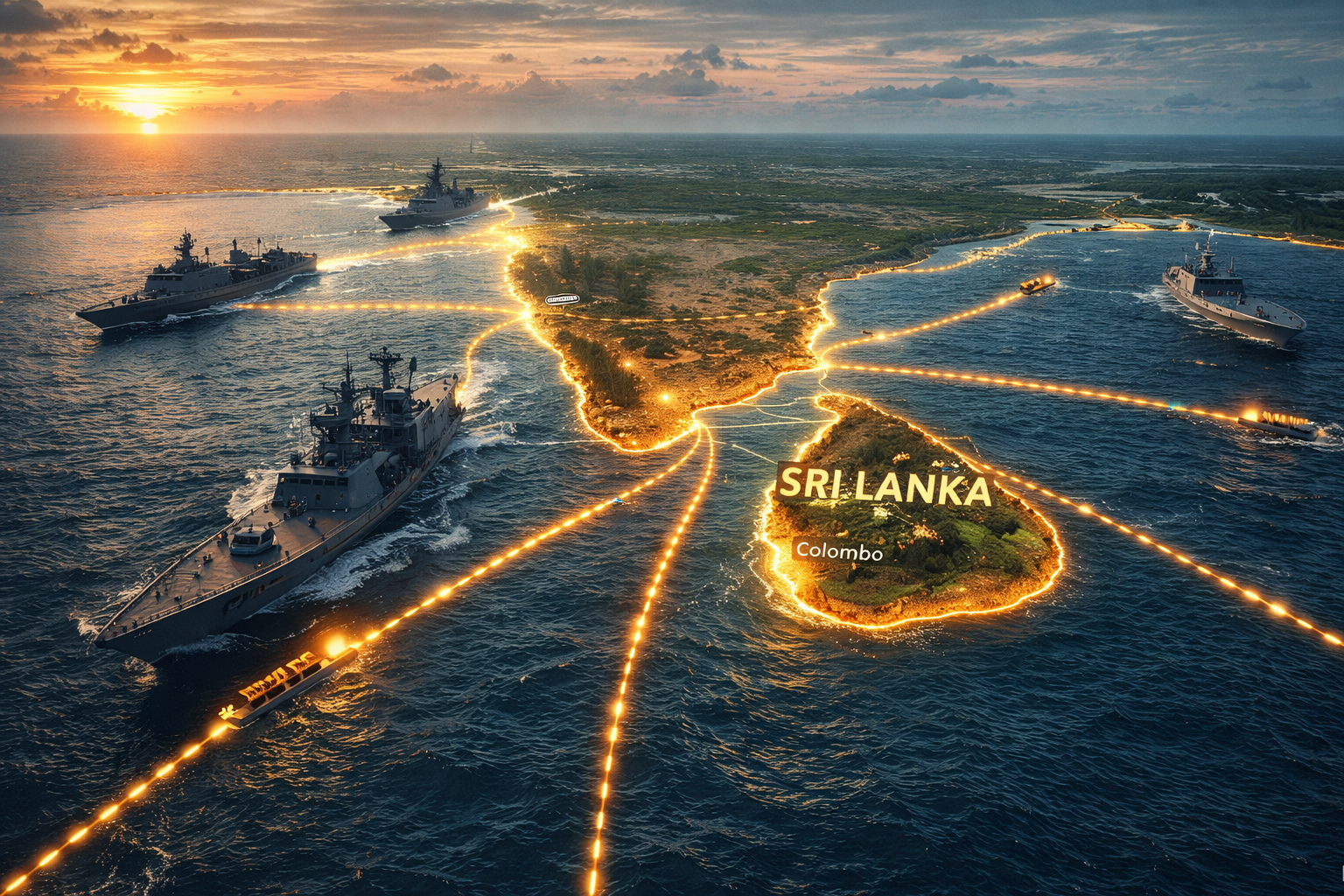
In a dramatic escalation of the ongoing US-Israel-Iran conflict, the United States Navy sank an Iranian frigate in international waters off the coast of Sri Lanka on March 4, 2026. This incident, the first torpedo sinking of an enemy warship by a US submarine since World War II, has sent shockwaves through the global maritime community and raised pointed questions about regional sovereignty, particularly for India. As tensions in the Middle East spill into the Indian Ocean, this event underscores the precarious balance of power in South Asia and the potential for unintended consequences in neutral waters.
The Incident: Timeline and Details
The sinking occurred at approximately 5:08 a.m. Sri Lanka Standard Time (SLST) on March 4, 2026, in international waters roughly 40 nautical miles (74 km) south of Galle, Sri Lanka. The targeted vessel was the IRIS Dena, a Moudge-class frigate of the Iranian Navy, carrying around 180 crew members. The ship was en route back to Iran after participating in India's MILAN 2026 multinational naval exercise in Visakhapatnam, which concluded on February 25, 2026. Notably, vessels in such exercises are required to be unarmed for safety reasons, leaving the Dena potentially defenseless.According to reports, the IRIS Dena had requested emergency berthing at a Sri Lankan port but faced an 11-hour delay. During this window, a US fast-attack submarine—likely from the Virginia-class—fired a single Mk-48 torpedo, striking and sinking the ship. US Defense Secretary Pete Hegseth confirmed the operation later that day, releasing footage of the strike and describing it as a "quiet death" for a vessel that "thought it was safe."The aftermath was grim: Sri Lankan Navy vessels responded to a distress call, recovering 87 bodies, rescuing 32 survivors (many injured), and noting 61 crew members still missing. The Indian Navy also assisted from Kochi, highlighting a humanitarian response amid the chaos. Iran condemned the attack as an assault on a "defenseless" ship and vowed retaliation, while a second Iranian vessel reportedly moved toward the area.
Implications for India and Regional Stability
The location—about 417 km from India's coastline—places this firmly in India's strategic backyard. While technically in international waters, the incident has sparked debates in India about whether it constitutes an "affront" to its sovereignty. Critics, including some political figures, argue that targeting a vessel recently hosted by India undermines regional neutrality and could drag South Asia into the fray. India, a QUAD partner with the US but also reliant on Iranian ties for projects like the Chabahar port, finds itself in a delicate position.Broader concerns include environmental risks from oil slicks, disruptions to vital shipping lanes, and heightened tensions in the Indian Ocean. This event expands the naval theater of the US-Iran war far beyond the Gulf, potentially affecting global oil prices and trade routes critical to India's economy. Sri Lanka's involvement in rescue operations further complicates matters for smaller nations caught in superpower crossfires.
Conclusion
The sinking of the IRIS Dena marks a bold and historic move by the US, signaling an unyielding commitment to degrading Iranian capabilities amid the broader conflict. However, its proximity to South Asia amplifies risks of spillover, testing India's non-aligned foreign policy and regional maritime security. While not a direct violation of sovereignty, the incident highlights how distant wars can encroach on neutral territories, potentially destabilizing global trade and alliances.
"The decisions we make today will shape the world for generations to come."