The cap that sat still while prices moved is finally moving.
On 16 September 2026 the Union Cabinet raised the statutory wage ceiling for mandatory Employees’ Provident Fund coverage from ₹15,000 a month to ₹25,000. Labour Minister Mansukh Mandaviya said it takes effect from 17 September Vishwakarma Jayanti. The government expects more than 51 lakh additional employees inside the net. Mandaviya floated a higher range, up to a crore. The official note sticks to 51 lakh. That is the first honesty test of the whole package.
What actually changed
The ceiling is the wage on which law forces EPF, EPS and EDLI when a worker joins a covered shop. From 2004 to 2014 it did not move. In September 2014 it went to ₹15,000. For twelve years after that, a new hire whose basic plus dearness allowance sat above ₹15,000 was not automatically pulled into the statutory scheme. Many firms simply declared they had nobody under the old line and stayed outside. The new line is ₹25,000. Fresh joiners and existing staff in the ₹15,001–₹25,000 band come under mandatory membership, subject to the scheme rules. They get three doors: Employees’ Provident Fund savings, Employees’ Pension Scheme, and Employees’ Deposit Linked Insurance.
Contribution rates did not change. Twelve percent from the employee. Twelve percent from the employer. What changed is the rupee base those percentages multiply.
The money math
On a ₹15,000 ceiling, the statutory 12 percent is ₹1,800 each side.
On a ₹25,000 ceiling, the statutory 12 percent is ₹3,000 on each side.
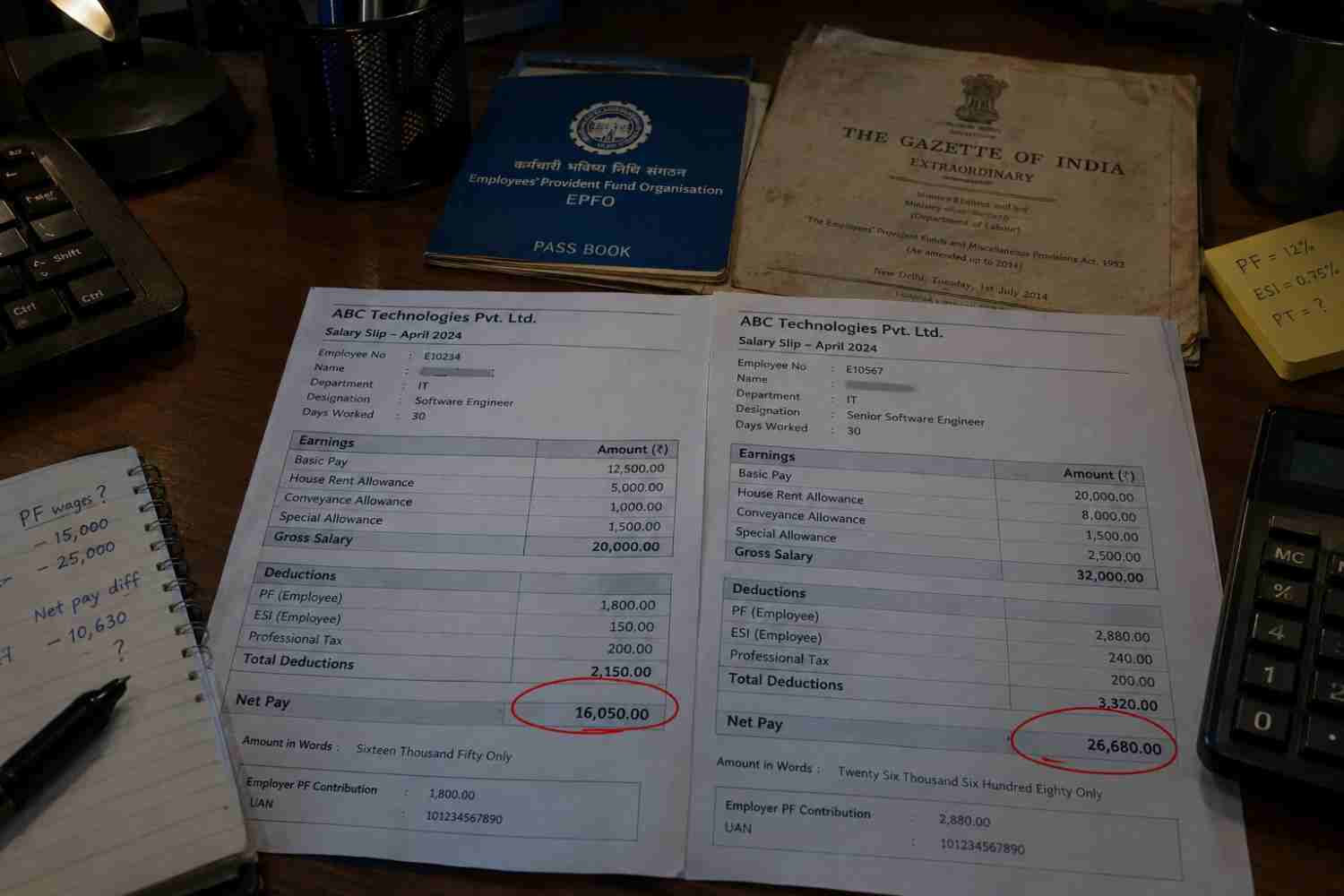
That is ₹1,200 more from the worker’s slip and ₹1,200 more from the company ₹2,400 extra parked every month if both sides were previously stuck at the old cap. Over a year the worker’s own extra is ₹14,400. It is not a tax. It is a forced transfer from cash to the PF account. Take-home falls by that ₹1,200 unless the employer rewrites the CTC and eats the cost.
The employer’s ₹3,000 is not one pot. Of the 12 percent, 8.33 percent of the ceiling goes to EPS, and 3.67 percent stays in EPF. That is why Mandaviya’s briefing mixed the labels. Eight-point-three-three percent of ₹25,000 is ₹2,082.50 the new EPS slice from the employer, up from ₹1,250 on ₹15,000. The leftover ₹917.50 of the employer’s 12 percent goes to the worker’s PF, up from ₹550. The minister also said the employer’s burden rises by about ₹600 per head on average. That average is not the full cap-to-cap jump. It is a blended official estimate across newly covered staff and those already contributing. EDLI, the death insurance piece, is 0.5 percent of wages on the employer, so the cap lift takes that line from ₹75 to ₹125 a month unless a separate EDLI cap is notified.
Who feels the slip?
Three groups, three outcomes.
One: a new joiner at ₹22,000 PF wages. Under the old rule they could sit outside mandatory cover. Under the new rule they are in. First month they lose 12 percent of that wage to their own PF and the firm pays its 12 percent. Cash shrinks. A passbook appears.
Two: an existing member whose company already restricted both sides to the ₹15,000 cap even though the appointment letter said ₹30,000 basic. Statutory floor rises. Deduction can jump from ₹1,800 to ₹3,000. Net salary drops ₹1,200 if nothing else in the structure moves.
Three: a worker whose firm already contributes to actual wages above the old ceiling. For them the legal floor moved; their voluntary higher contribution may not. Payroll must still map the new EPS cap of ₹2,082.50.
Do not assume September’s salary already shows it. Business Standard noted that the labor ministry and EPFO still have statutory and software steps before every establishment’s e-return matches the Cabinet line. Treat 17 September as the political date. Treat the first correct slip as the real one.
Pension, insurance, the long tail
The EPS pension is not 8.33 percent paid back as a cheque. The formula is pensionable salary times pensionable service, divided by 70. Pensionable salary is the average of basic plus DA in the last 60 months, capped at the ceiling. If that cap is now ₹25,000 instead of ₹15,000, the theoretical monthly pension at 10 years of service moves from about ₹2,143 to about ₹3,571. At 20 years, from about ₹4,714 to about ₹7,857. Those are formula illustrations, not a promise. They assume the last-five-year average actually sits on the new ceiling and that service is counted cleanly. EPFO’s own claim queues have never been that clean.
EDLI pays a lump sum to the family on death in service, linked to wages and scheme limits. A higher wage base can lift that cover. It does not replace a will or a term plan.
Government cost is booked at ₹11,339 crore a year against about ₹10,250 crore of existing budgetary support, and ₹56,696 crore over five years — the EPS subsidy the treasury already carries, now drawn wider. EPFO counts about 7.98 crore contributing members across 7.68 lakh establishments and about 82 lakh pensioners. Adding 51 lakh is a membership event. It is not a claim-processing event.
What the system will try next
Employers who spent a decade splitting “basic” into allowances to keep PF wages under ₹15,000 will try the same trick under ₹25,000. Unions called the hike too little and too late and wanted ₹30,000 after twelve years of inflation. They also warned that firms will shove the extra 12 percent onto the worker’s CTC and call it formalisation. That is the Indian pattern: announce a social security widening, then let the payslip do the austerity.
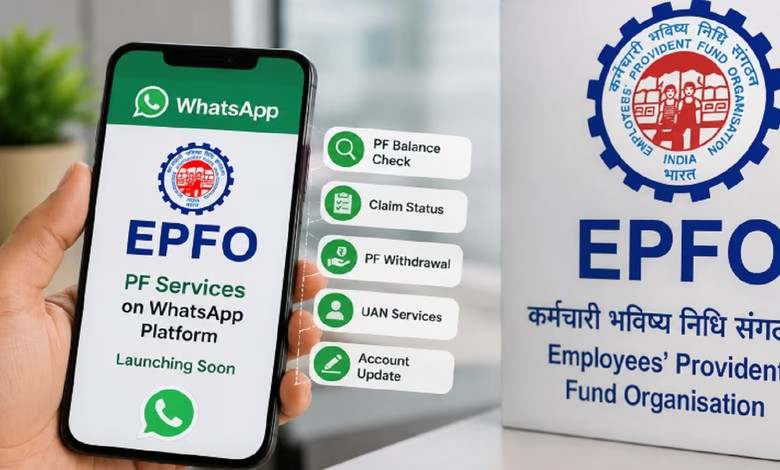
The same week EPFO advertised a WhatsApp channel and a future chatbot for balances. A worker who cannot get a transfer or a claim in months does not need another broadcast. They need the extra ₹1,200 to land in an account they can see and withdraw under rules that do not require a pilgrimage.
Read the Cabinet decision as a floor shift, not a gift. If you sit between ₹15,000 and ₹25,000 and were outside, you enter. If you were capped at ₹15,000, your deduction can rise by ₹1,200 and your employer’s EPS credit rises to ₹2,082.50. Your retirement pot grows only if the money is actually remitted, the UAN is linked, and the pensionable salary used at exit is the new ceiling rather than a creative allowance sheet. Ask payroll, in writing, which wage they will use from the first month the e-return changes. That letter is worth more than the press conference.
Disclaimer
Contribution examples use the statutory 12 percent and the new ₹25,000 ceiling. Actual slips depend on whether your firm already contributes above the old cap, on the definition of wages in your contract, and on EPFO’s implementing circular. This is news, not tax or investment advice.
Official sources
Press Information Bureau — “Cabinet approves enhancement of EPFO wage ceiling from Rs.15,000 to Rs.25,000 per month,” 16 September 2026
PIB / Ministry of Labour & Employment — ceiling effective 17 September 2026 (Vishwakarma Jayanti); 51 lakh additional employees; outgo ₹11,339 crore a year, ₹56,696 crore over five years
Union Labour Minister Mansukh Mandaviya briefing, 16 September 2026 — employer cost and EPS 8.33 percent of the new ceiling (₹2,082.50 vs ₹1,250)
"The decisions we make today will shape the world for generations to come."